
Why You Wake Up at 3 AM: And What Your Body May Be Telling You

Why You Wake Up at 3 AM: And What Your Body May Be Telling You
You fall asleep without much trouble. Then, sometime in the middle of the night, you suddenly open your eyes.
You look at the clock.
3:07 AM.
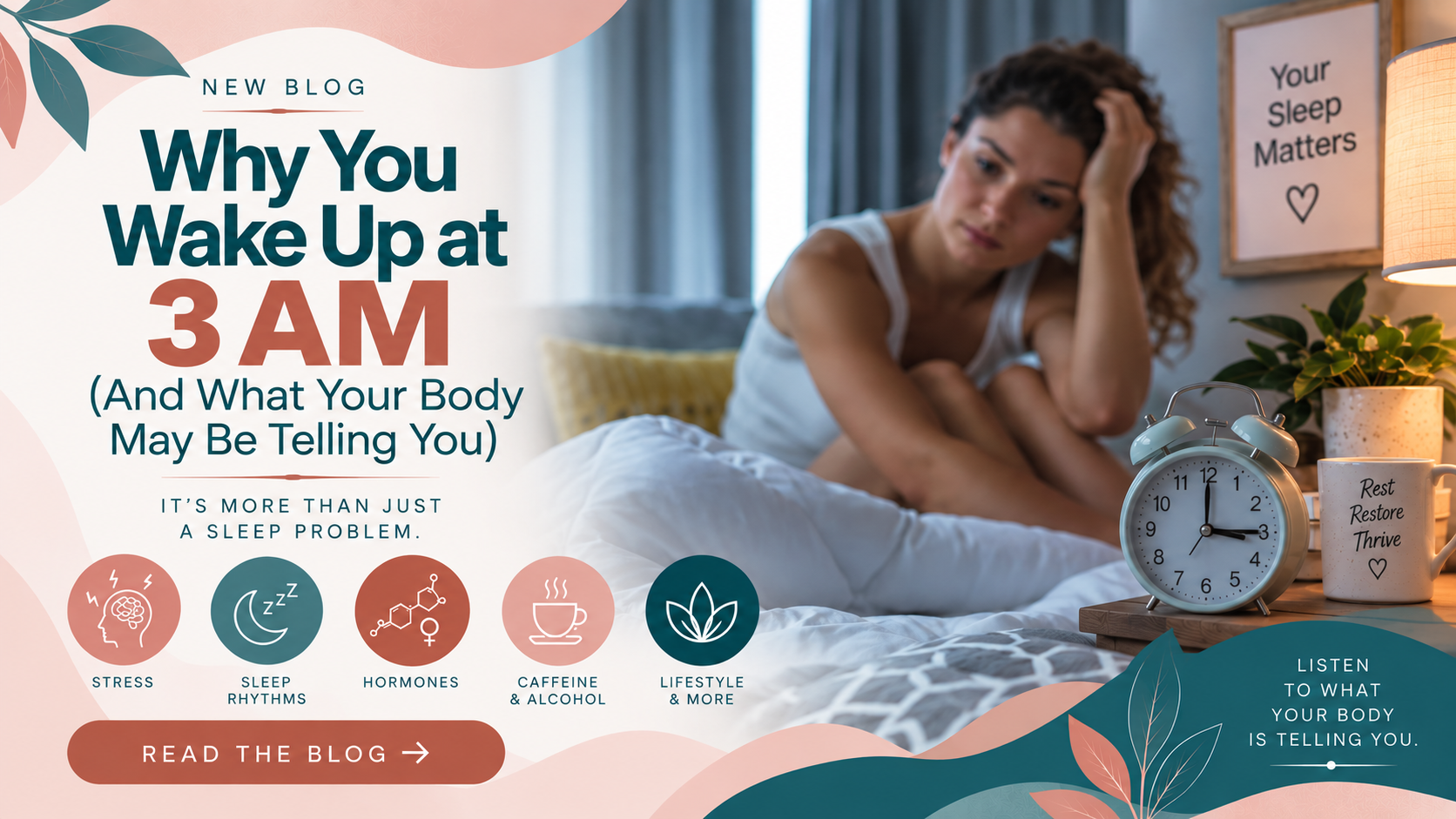
You try to go back to sleep, but your mind is suddenly awake. Maybe you're thinking about tomorrow's to-do list. Maybe you're warm, restless, hungry, thirsty, or you simply cannot settle back down.
And if this happens regularly, you may start wondering:
Why do I keep waking up at 3 AM?
There isn't one universal explanation. Waking during the night can happen for many reasons, including normal changes in sleep architecture, stress, alcohol or caffeine, an inconsistent sleep schedule, hormonal changes, medications, nighttime urination, or an underlying sleep disorder. (NHLBI, NIH)
So rather than assuming that waking at 3 AM automatically means your cortisol is "spiking," it can be more helpful to look at the bigger picture.
First, Is Waking Up During the Night Normal?
To some extent, yes.
Sleep isn't one continuous state. Throughout the night, your body moves through cycles of non-REM and REM sleep. Some stages are deeper than others, and brief awakenings can occur as you transition between them. (National Institute on Aging)
The problem is when those awakenings become frequent, prolonged, or disruptive.
If you're regularly awake for long periods, struggling to fall back asleep, or waking feeling unrefreshed, it may be a sign that something is interfering with your sleep quality. (NHLBI, NIH)
And that's where the details matter.
1. Stress May Be Keeping Your Nervous System Alert
One of the most common reasons people have difficulty staying asleep is stress.
Your brain doesn't necessarily stop processing stress simply because you climbed into bed.
Work, relationships, finances, caregiving, health concerns, and even worrying about whether you'll sleep can contribute to insomnia or make existing sleep problems worse. (NHLBI, NIH)
You might recognize the pattern:
Busy day → exhausted at bedtime → fall asleep → wake during the night → mind starts racing → can't fall back asleep.
The more often this happens, the more frustrating bedtime can become.
This doesn't mean that every 3 AM awakening is caused by cortisol. Cortisol is part of your normal circadian system and naturally rises toward morning to help prepare your body for waking. (NHLBI, NIH)
The important question is whether stress, sleep timing, and your overall sleep-wake rhythm are working together or working against you.
2. Your Circadian Rhythm May Be Part of the Picture
Your body has an internal clock that follows an approximately 24-hour rhythm.
This circadian system helps coordinate sleep and wakefulness, hormone release, body temperature, metabolism, and other processes. Light and darkness are some of its most important environmental cues. (NHLBI, NIH)
Melatonin generally rises in the evening and helps promote sleep, while cortisol naturally increases as morning approaches to help your body become more alert. (NHLBI, NIH)
That means the middle of the night isn't simply a period when your body is "supposed to be completely off."
Your brain and body are still moving through carefully regulated biological rhythms.
Late-night bright light, inconsistent sleep schedules, shift work, travel, and caffeine can interfere with these rhythms. (NHLBI, NIH)
3. Alcohol Can Make You Sleepy, But That Doesn't Mean You'll Sleep Well
A glass of wine may make you feel relaxed enough to fall asleep faster.
But falling asleep isn't the same thing as getting restorative sleep.
Alcohol can make sleep lighter and increase the likelihood of waking during the night. (NHLBI, NIH)
If you regularly wake around the same time after drinking in the evening, it may be worth looking at whether alcohol is contributing to the pattern.
This is especially important if you're already struggling with fragmented sleep.
4. Caffeine Can Stay in the Picture Longer Than You Think
That afternoon coffee may feel harmless, especially if you can fall asleep easily at night.
But caffeine can interfere with sleep, and individual sensitivity varies.
NHLBI recommends avoiding caffeine close to bedtime because it can make it harder to sleep. (NHLBI, NIH)
If you're relying on caffeine to get through the afternoon because you're already exhausted, you can end up in a frustrating cycle:
Poor sleep → more caffeine → disrupted sleep → more fatigue.
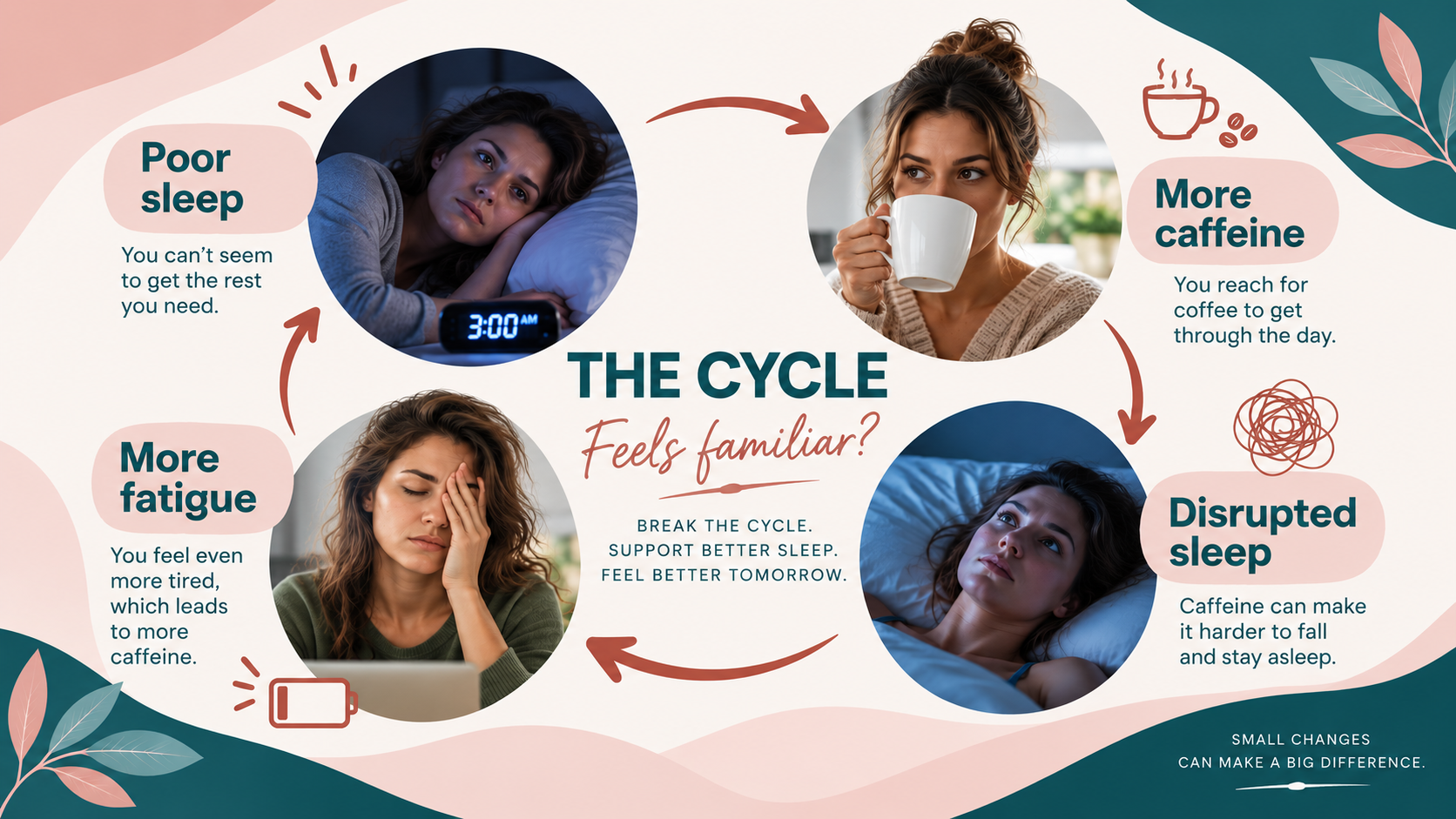
Instead of immediately reaching for another cup, pay attention to what your sleep and energy patterns are telling you.
5. Hormonal Changes Can Influence Sleep
For women, sleep can also change throughout different stages of life.
Pregnancy, perimenopause, and menopause can be associated with sleep difficulties, and hormonal changes can contribute to disrupted sleep. (NHLBI, NIH)
During the menopausal transition, for example, sleep disturbances are common. Hot flashes and nighttime awakenings can occur together, and research suggests the relationship may be more complicated than simply saying that hot flashes always cause the awakening. (National Institute on Aging)
If your nighttime waking is happening alongside:
Changes in your menstrual cycle
Hot flashes or night sweats
Mood changes
Increased fatigue
New sleep difficulties
Changes in energy
it may be useful to consider the broader hormonal picture rather than looking at sleep in isolation.
6. You May Be Waking Up Because You Need to Use the Bathroom
Sometimes the explanation is much simpler.
Drinking large amounts of fluid late in the evening can contribute to nighttime urination. Caffeine can also increase urinary symptoms in some people. (PubMed Central (PMC))
If you're waking specifically because you need to urinate, pay attention to:
How much you're drinking in the evening, when you're drinking it, and whether this happens once or multiple times each night.
Frequent nighttime urination can have many possible causes, so persistent symptoms are worth discussing with a healthcare professional.
7. Your Sleep Environment Matters More Than You Think
Sometimes your body isn't the problem. Your environment is.
Noise, light, temperature, an uncomfortable mattress, pets, a partner's movement, or your phone can all interfere with sleep.
Even the glow from a screen can provide light cues that affect the sleep-wake system. (NHLBI, NIH)
Your bedroom should ideally be:
Cool. Quiet. Dark. Comfortable.
It sounds simple, but these basics can make a meaningful difference.
What About the "3 AM Cortisol Spike"?
This is one of the most common explanations you'll see online.
But it's important to be careful here.
Waking at 3 AM does not automatically mean you have a cortisol problem.
Cortisol follows a daily rhythm and normally increases as morning approaches. Stress can also affect sleep and the body's stress response, but a clock time alone cannot tell you that your cortisol is abnormal. (NHLBI, NIH)
If you're consistently waking at night, the more useful question is:
What factors could be contributing to this pattern?
That may include stress, sleep schedule, caffeine, alcohol, hormonal changes, medications, nighttime urination, sleep apnea, or other medical and sleep-related conditions. (NHLBI, NIH)
What Your 3 AM Wake-Up May Be Telling You
Instead of immediately assuming something is wrong with one hormone, start looking for patterns.
Ask yourself:
Are you stressed during the day?
If your nervous system is constantly dealing with stress, nighttime may not automatically feel restful.
Are you waking hot or sweaty?
This may be particularly relevant during perimenopause or menopause.
Are you waking hungry or experiencing strong cravings?
Look at your overall eating pattern, meal timing, alcohol intake, and sleep quality rather than assuming one specific cause.
Are you waking to urinate?
Consider evening fluids, caffeine, and whether the problem is becoming frequent.
Are you waking with your mind racing?
Stress and worry can contribute to difficulty staying asleep.
Are you exhausted despite spending enough time in bed?
That may warrant a closer look at sleep quality and potential sleep disorders.
What You Can Do Tonight
You don't need a complicated nighttime routine to start supporting better sleep.
1. Keep your sleep schedule consistent
Try going to bed and waking around the same time each day. A regular schedule can help maintain your sleep-wake rhythm. (NHLBI, NIH)
2. Be intentional with caffeine
Experiment with moving caffeine earlier in the day if you're having trouble staying asleep.
3. Limit alcohol close to bedtime
Alcohol may make you sleepy initially but can contribute to lighter, more fragmented sleep. (NHLBI, NIH)
4. Create a calmer transition into bedtime
Give your brain time to shift out of work mode. Reading, gentle stretching, breathing exercises, or a warm bath can become cues that the day is winding down.
5. Keep the bedroom dark and comfortable
Reduce unnecessary light and keep the environment quiet and cool. (NHLBI, NIH)
6. Don't obsess over the clock
If you wake up and immediately start calculating how many hours you have left to sleep, anxiety can make it even harder to settle back down. Stress about sleep itself can contribute to insomnia. (NHLBI, NIH)
7. Track the pattern
For a couple of weeks, consider keeping a simple sleep diary.
Record:
Bedtime
Approximate wake-ups
How long you stayed awake
Caffeine
Alcohol
Exercise
Stress level
Menstrual cycle information, if relevant
How rested you felt the next morning
A sleep diary can help reveal patterns and gives your healthcare provider useful information if further evaluation is needed. (National Institute on Aging)
When It's Time to Look Deeper
Occasional nighttime waking is not necessarily a sign of a health problem.
But if you're regularly waking during the night, struggling to fall back asleep, or feeling exhausted during the day, it's worth paying attention.
And if you snore loudly, wake gasping or choking, experience significant daytime sleepiness, or have persistent sleep problems, talk with a healthcare professional. Sleep apnea and other sleep disorders can interfere with restorative sleep and may require specific evaluation. (NHLBI, NIH)
At Credence Functional Health, we believe symptoms deserve context.
Rather than looking at one symptom in isolation, functional medicine considers the bigger picture: sleep, stress, hormones, nutrition, lifestyle, and other factors that may be contributing to how you're feeling.
The goal isn't to blame every 3 AM awakening on cortisol.
It's to understand your pattern.
The Bottom Line
If you wake up at 3 AM, your body isn't necessarily sending you one specific message.
It may be responding to stress, your circadian rhythm, caffeine, alcohol, hormonal changes, your sleep environment, nighttime urination, or an underlying sleep issue.
The clock tells you when you're waking. The pattern may tell you why.
If nighttime waking has become a regular part of your life, don't simply accept exhaustion as normal.
Start paying attention to the bigger picture.
Your sleep is information.
And sometimes, it's worth listening.
FAQ
Is waking up at 3 AM a sign of high cortisol?
Not necessarily. Cortisol naturally follows a daily rhythm and generally rises as morning approaches. Waking at 3 AM alone cannot establish that cortisol is elevated or abnormal. (NHLBI, NIH)
Why do I wake up at the same time every night?
A consistent wake time can reflect your circadian rhythm, but repeated awakenings can also be related to stress, habits, environmental factors, medications, hormonal changes, alcohol, caffeine, or sleep disorders. (NHLBI, NIH)
Can menopause cause nighttime waking?
Sleep problems are common during the menopausal transition. Hormonal changes, hot flashes, and other symptoms can contribute to disrupted sleep. (National Institute on Aging)
How can I stop waking up in the middle of the night?
Start with consistent sleep and wake times, a comfortable dark bedroom, limiting caffeine and alcohol near bedtime, and creating a relaxing bedtime routine. If the problem persists, consider discussing it with a healthcare professional. (NHLBI, NIH)
When should I talk to a doctor about waking up at night?
Consider seeking professional evaluation if nighttime waking is frequent or persistent, affects your daytime functioning, or occurs with symptoms such as loud snoring, gasping, significant daytime sleepiness, or difficulty staying asleep. (NHLBI, NIH)
Waking at 3 AM doesn't automatically mean your cortisol is out of balance. Your sleep pattern is influenced by many interconnected factors, and understanding the bigger picture can help uncover what may be disrupting your rest.

Disclaimer:
This blog is intended for educational purposes only and does not constitute medical advice, diagnosis, or treatment. Hormonal birth control and hormone-related concerns are complex and should be evaluated by a qualified healthcare provider. At Credence Functional Health, we offer Functional Medicine as a complementary, integrative approach—not a replacement for traditional gynecological or mental health care. The strategies discussed in this blog may not be appropriate for every individual. Always consult your physician before making changes to medications, supplements, or health routines. We encourage you to partner with your medical team to ensure a safe, informed transition that supports your overall wellness.


