
Why Processed Foods Fuel Inflammation: What Every Woman Should Know
Why Processed Foods Fuel Inflammation: What Every Woman Should Know
How Your Diet Can Influence Gut Health, Hormones, Metabolism, and Women's Health
You don't have to eat perfectly to be healthy.
And enjoying a cookie, ordering takeout, or grabbing a packaged snack does not automatically mean you're causing inflammation in your body.
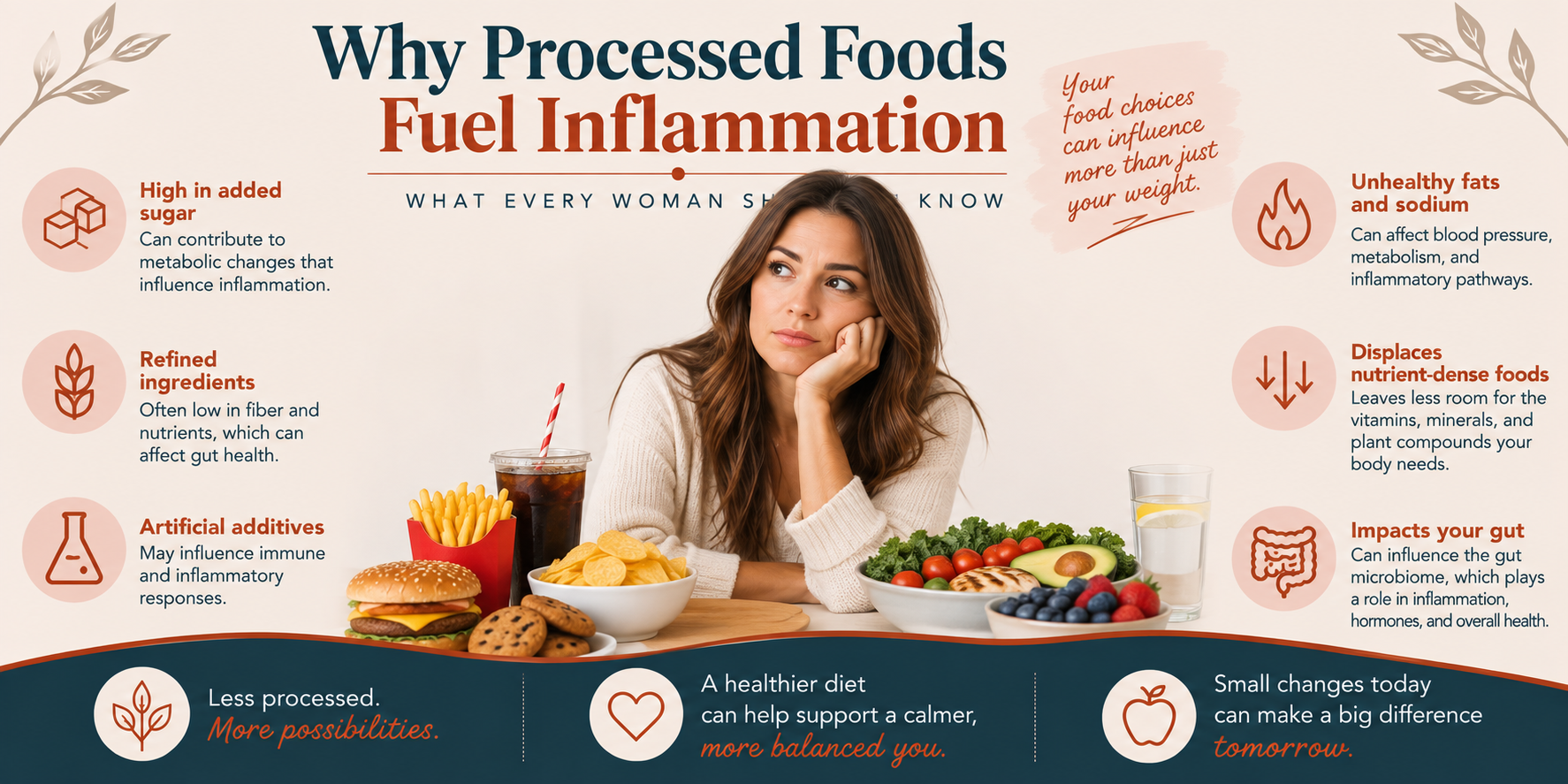
But when ultra-processed foods become a regular part of your diet, they can begin to displace the nutrient-dense foods your body needs and may contribute to metabolic and inflammatory changes over time.
This matters because inflammation does not exist in isolation.
Your gut, hormones, immune system, metabolism, and overall health are constantly communicating with one another.
Research increasingly shows an association between higher intake of ultra-processed foods and elevated inflammatory biomarkers, particularly C-reactive protein and high-sensitivity C-reactive protein. (PubMed Central (PMC))
So the question isn't:
"Are processed foods bad?"
A better question is:
"What happens when highly processed foods make up too much of my diet?"
At Credence Functional Health, we believe nutrition should be approached without fear or perfectionism. The goal is to understand how your food choices may be affecting your health and create sustainable habits that support your individual needs.
What Are Processed and Ultra-Processed Foods?
First, let's make an important distinction.
Not all processed foods are unhealthy.
Some processing can actually make foods safer, more convenient, or easier to eat. Frozen vegetables, canned beans, plain yogurt, and pasteurized milk are all processed in some way.
The concern is primarily with ultra-processed foods, which are industrially formulated products that often contain combinations of refined ingredients, added sugars, fats, sodium, and additives.
Examples may include:
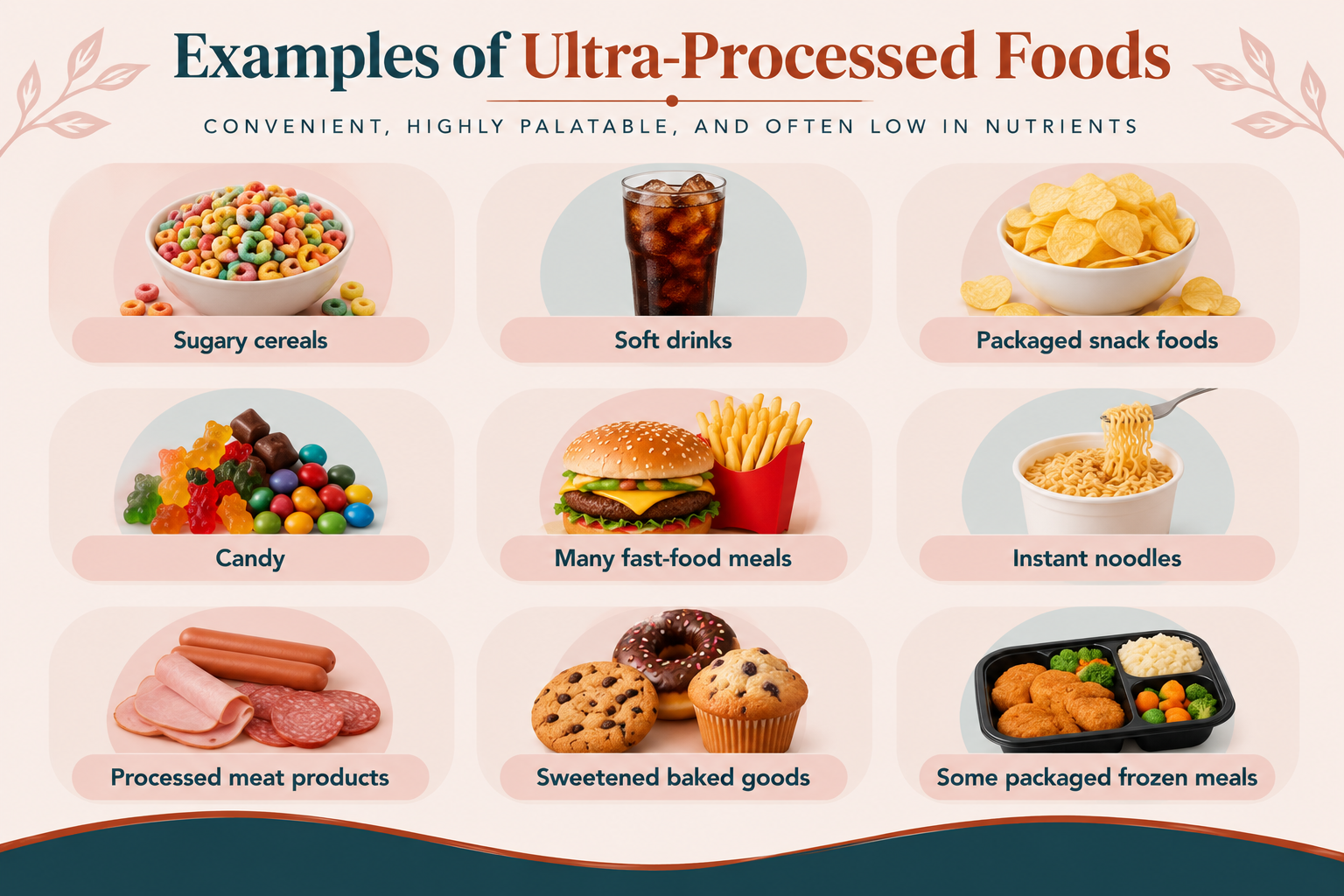
Ultra-processed foods are often designed to be highly convenient, highly palatable, and easy to consume.
Large observational studies have found that higher consumption of ultra-processed foods is associated with a range of adverse health outcomes, particularly cardiometabolic conditions such as type 2 diabetes and cardiovascular disease. However, researchers also emphasize that the evidence varies by outcome and that associations do not automatically prove that processing itself causes every health problem. (PubMed)
How Can Processed Foods Contribute to Inflammation?
Inflammation is a normal and necessary part of your immune response.
The problem is not inflammation itself.
The concern is persistent, low-grade inflammation that may accompany certain chronic health conditions and metabolic disturbances.
Several characteristics of ultra-processed diets may contribute to an environment associated with inflammation.
1. They Can Be Low in Fiber
Fiber is found naturally in foods such as vegetables, fruits, legumes, whole grains, nuts, and seeds.
Many ultra-processed foods contain relatively little fiber compared with whole or minimally processed foods.
Fiber is important for digestive health and also serves as a fuel source for certain gut microorganisms.
A diet lacking dietary variety and fiber can therefore affect the environment in which your gut microbiome functions.
2. They Can Contain Large Amounts of Added Sugar
Consistently consuming large amounts of added sugar can make it more difficult to maintain healthy blood glucose and energy regulation.
Over time, metabolic dysfunction can interact with inflammatory pathways.
This does not mean that eating sugar occasionally causes inflammation.
Your overall dietary pattern matters much more than one food or one meal.
3. They Can Be High in Refined Carbohydrates
Many highly processed foods are made with refined grains and other rapidly digested carbohydrates.
When these foods frequently replace fiber-rich carbohydrates, protein, vegetables, and healthy fats, your overall diet may become less nutrient-dense.
That can influence satiety, blood sugar regulation, and metabolic health.
4. They May Contain High Levels of Sodium and Certain Fats
Some ultra-processed foods contain substantial amounts of sodium and saturated fat.
The health effects depend on the overall dietary pattern, the specific food, and how much is consumed.
This is another reason why looking at your entire diet is more useful than labeling individual ingredients as simply "good" or "bad."
5. They Can Displace Nutrient-Dense Foods
This may be one of the most important pieces of the puzzle.
If packaged snacks, fast food, sugary drinks, and refined foods make up a large portion of your diet, there may be less room for foods that provide:
Fiber
Protein
Vitamins and minerals
Omega-3 fatty acids
Polyphenols
Antioxidants
Other beneficial plant compounds
A nutrient-dense diet provides more of the building blocks your body needs to support normal metabolic and immune function. Dietary patterns rich in vegetables, fruits, whole grains, healthy fats, and other minimally processed foods are generally associated with lower inflammatory burden. (PubMed Central (PMC))
What Does This Have to Do With Your Gut?
Your gut is one of the reasons we pay attention to food quality.
The microorganisms living in your digestive tract interact with the foods you eat and the environment within your gastrointestinal system.
Dietary fiber, for example, can be fermented by gut microorganisms and contribute to the production of short-chain fatty acids, which play important roles in gut and metabolic health.
A diet dominated by highly processed foods and low in plant diversity may provide less of the variety of substrates that support a diverse gut ecosystem.
This doesn't mean:
"Processed food destroys your gut."
That's far too simplistic.
But it does mean your overall eating pattern can influence your digestive environment, which is one reason nutrition is such an important part of functional medicine.
What About Hormones and Women's Health?
This is especially relevant when we're talking about women's health.
Your metabolic health, gut health, and hormonal health are interconnected.
Conditions such as PCOS involve both reproductive and metabolic factors. Women with endometriosis may also experience digestive symptoms and inflammatory concerns.
That does not mean processed foods cause PCOS or endometriosis.
They don't.
And we should be careful about making claims that a particular food "causes hormone imbalance."
Instead, think about the bigger picture.
A diet that consistently provides fewer nutrients and more refined, energy-dense foods may contribute to metabolic health challenges that can influence overall well-being.
For women already dealing with hormone-related symptoms, supporting nutrition, blood sugar regulation, gut health, sleep, and lifestyle can be an important part of a comprehensive approach.
Can Processed Foods Affect How You Feel?
Sometimes the first signs aren't found on a laboratory report.
You may notice:
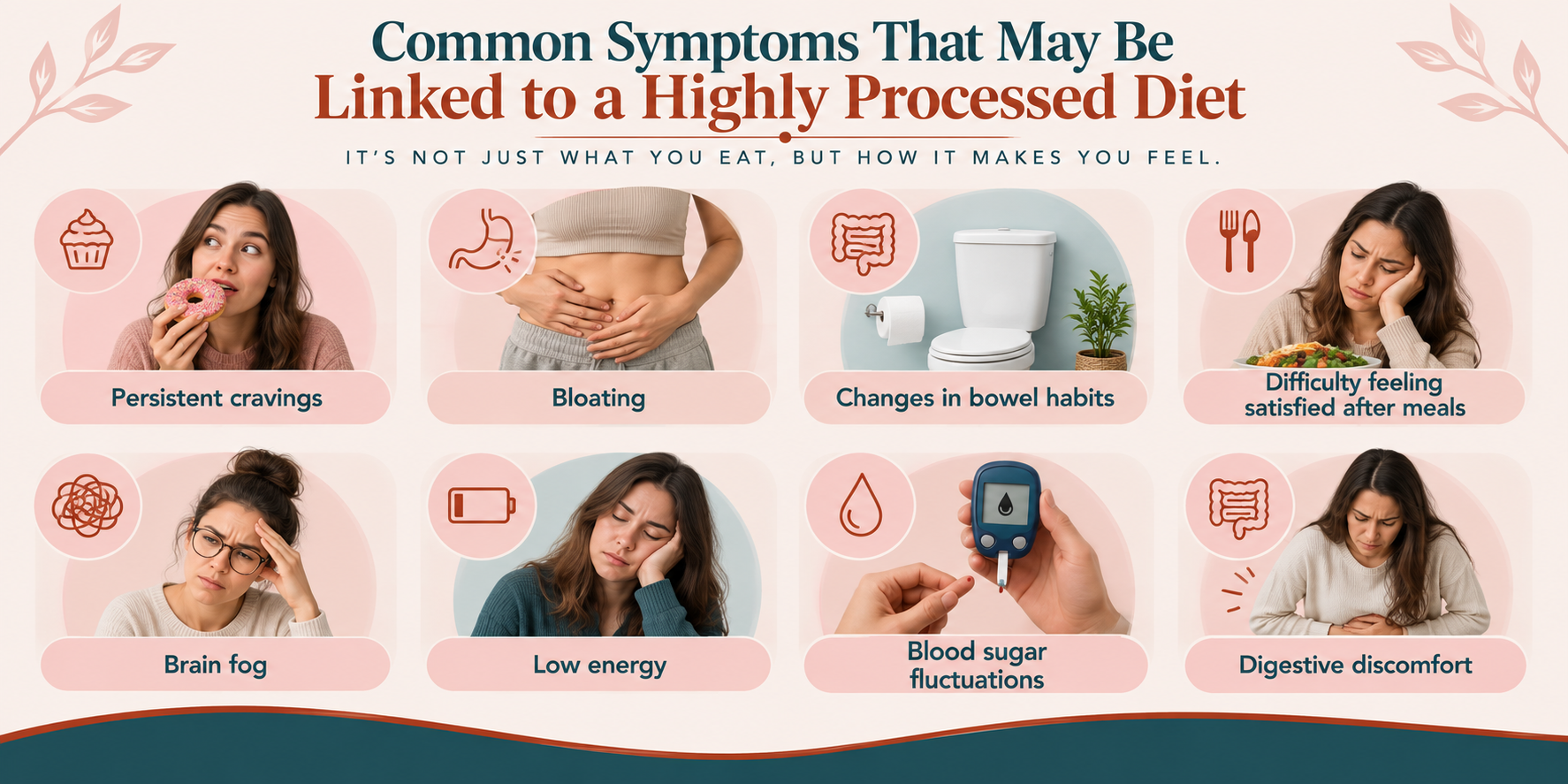
These symptoms don't automatically mean that processed foods are the cause.
Symptoms are clues, not diagnoses.
But if you notice that you consistently feel worse after a diet dominated by highly processed foods, that's useful information to discuss with a healthcare professional.
Does This Mean You Need to Stop Eating Processed Foods?
No.
This is not about creating another list of foods you're afraid to eat.
You do not need a perfect diet to support your health.
Instead, consider what you can add.
Try adding:
More Colorful Vegetables
Aim for variety rather than eating the same few vegetables every day.
More Fiber-Rich Foods
Beans, lentils, fruits, vegetables, whole grains, nuts, and seeds can help increase dietary fiber.
More Protein
Protein can support satiety and help create more balanced meals.
Healthy Fats
Foods such as avocado, nuts, seeds, olive oil, and fatty fish can contribute beneficial fats and other nutrients.
More Variety
The goal isn't to find one "superfood."
It's to create a dietary pattern that provides a broad range of nutrients and plant compounds.
Try This Simple Approach
Instead of asking:
"What foods do I need to eliminate?"
Try asking:
"What nutrient-dense foods can I add to this meal?"
If you're eating pasta, add vegetables and a source of protein.
If you're having a snack, consider pairing it with protein, fruit, or nuts.
If you're ordering takeout, look for an option that includes vegetables and a protein source.
If you regularly drink sugary beverages, gradually replace some of them with water or unsweetened options.
Small changes can become meaningful when they are repeated consistently.
The Functional Medicine Perspective
At Credence Functional Health, we don't believe nutrition should be about guilt, restriction, or chasing the "perfect" diet.
We look at the bigger picture.
That can include:
Gut Health → Blood Sugar → Metabolism → Hormones → Inflammation → Energy → Overall Health
Your food choices are only one part of that picture.
Your sleep matters.
Your stress matters.
Your movement matters.
Your digestive health matters.
Your medical history matters.
And your individual nutritional needs matter.
Functional medicine asks not only, "What are you eating?" but also:
"How is your body responding?"
That's where personalized care can become important.
The Bottom Line
Processed foods aren't inherently "toxic," and you don't need to eliminate every packaged food from your life.
But a dietary pattern heavily centered around ultra-processed foods may be associated with increased inflammatory markers and a variety of health risks, while also crowding out the fiber, protein, vitamins, minerals, and plant compounds your body needs. (PubMed Central (PMC))
The goal isn't perfection.
The goal is progress.
Instead of focusing on what you need to take away, start thinking about what you can add:
More plants.
More fiber.
More variety.
More nutrient-dense foods.
More balanced meals.
And a better understanding of what your body needs.
Ready to Take the Next Step?
If you're struggling with digestive symptoms, fatigue, hormone concerns, inflammation, blood sugar issues, or simply don't feel like yourself, you don't have to figure it out alone.
👉 Schedule your consultation today at 320-226-7758 or book a Free Discovery Call.
Follow Credence Functional Health for more insights on gut health, hormones, and women's health:
You don't need a perfect diet to support your health. Start by choosing more whole, nutrient-dense foods and creating an eating pattern that supports your body consistently.
Frequently Asked Questions
Do processed foods cause inflammation?
Not every processed food causes inflammation. However, higher consumption of ultra-processed foods has been associated with higher levels of inflammatory biomarkers, particularly CRP and hs-CRP, in human studies. More research is still needed to determine causality and the specific mechanisms involved. (PubMed Central (PMC))
Do I need to completely eliminate processed foods?
No. A realistic approach is to focus on your overall dietary pattern and gradually increase whole and minimally processed foods rather than trying to eliminate every packaged food.
Can processed foods affect gut health?
Diet influences the gut environment and microbiome. Diets high in ultra-processed foods may also be lower in fiber and dietary variety. However, gut health is influenced by many factors, so processed foods should not automatically be considered the sole cause of digestive symptoms.
Can processed foods cause hormone imbalance?
There is not enough evidence to say that processed foods directly cause hormone imbalance. However, dietary patterns can influence metabolic health, and metabolic health is closely connected to hormonal health.
What should I eat instead of processed foods?
Focus on adding more vegetables, fruits, legumes, whole grains, nuts, seeds, quality protein, and healthy fats. You don't need to make every meal perfect. Consistency and variety matter.

Disclaimer:
This blog is intended for educational purposes only and does not constitute medical advice, diagnosis, or treatment. Hormonal birth control and hormone-related concerns are complex and should be evaluated by a qualified healthcare provider. At Credence Functional Health, we offer Functional Medicine as a complementary, integrative approach—not a replacement for traditional gynecological or mental health care. The strategies discussed in this blog may not be appropriate for every individual. Always consult your physician before making changes to medications, supplements, or health routines. We encourage you to partner with your medical team to ensure a safe, informed transition that supports your overall wellness.


