
What Most Women Don’t Know About the Supplement Industry

What Most Women Don’t Know About the Supplement Industry

How to Choose Supplements More Wisely Without Falling for Marketing Hype
Walk into any health store or scroll through social media, and you'll find thousands of supplements promising better energy, balanced hormones, improved digestion, clearer skin, better sleep, and more.
The packaging may look clinical. The ingredients may sound impressive. The testimonials may be convincing.
But here's something many women don't realize:
Not every supplement on the shelf has been evaluated by the FDA for safety and effectiveness before it reaches the market.
In the United States, dietary supplements are regulated differently from prescription and over-the-counter drugs. Manufacturers are responsible for ensuring their products are safe and that their labeling is truthful and not misleading, but the FDA does not approve most dietary supplements for safety and effectiveness before they are sold. (U.S. Food and Drug Administration)
That doesn't mean supplements are bad.
It means you need to be a more informed consumer.
At Credence Functional Health, we believe supplements can have a place in a personalized health plan, but they should not be treated as a substitute for nutritious food, healthy lifestyle habits, appropriate testing, or individualized medical care.
Supplements Are Not All Created Equal
The word "supplement" can make a product sound inherently safe and beneficial.
But supplements can vary significantly in:
Ingredient quality
Dosage
Form of the nutrient
Manufacturing practices
Purity
Testing
Potential interactions
Evidence supporting the specific ingredient and dose
Two products may contain the same vitamin or botanical but differ substantially in quality and formulation.
That's why simply choosing the product with the most impressive label isn't necessarily the best approach.
More ingredients don't automatically mean a better supplement.
The FDA Does Not Pre-Approve Most Supplements
This is one of the most important things for consumers to understand.
Dietary supplements are regulated under the Dietary Supplement Health and Education Act of 1994, commonly known as DSHEA.
Unlike medications, the FDA does not have authority to approve dietary supplements for safety and effectiveness or approve their labeling before most products are marketed. Companies are responsible for ensuring their products meet applicable safety and labeling requirements. (U.S. Food and Drug Administration)
The FDA can take action when supplements are adulterated or misbranded and can monitor products after they reach the marketplace.
So when you see a supplement on a store shelf, don't automatically assume:
"The FDA tested this product and confirmed that it works."
That is not how the supplement regulatory system works.
Marketing Claims Can Sound Stronger Than the Evidence
Supplement marketing is often designed to make you feel like you've found the missing piece.
Words such as:
Detox
Balance
Boost
Cleanse
Support
Reset
Optimize
can sound compelling.
But a marketing phrase doesn't necessarily tell you how strong the scientific evidence is behind a particular product.
FDA regulations distinguish between different types of claims that can appear on dietary supplement labeling, including health claims, nutrient content claims, and structure/function claims. Structure/function claims describe how a nutrient or dietary ingredient may affect the normal structure or function of the body. (U.S. Food and Drug Administration)
This distinction matters.
A statement that sounds like a medical promise may actually be a more general structure/function claim.
That's why it's important to look beyond the front of the bottle.
"Natural" Doesn't Automatically Mean Safe
One of the biggest misconceptions about supplements is that natural products are automatically safer than medications.
That's not necessarily true.
Botanicals and other natural ingredients can have biological effects.
They can also interact with medications or other supplements.
And taking multiple products at the same time can make it difficult to know what is actually helping, what may be causing side effects, or whether you're unnecessarily duplicating ingredients.
This is particularly important for women who may already be taking medications for:
Thyroid conditions
Blood pressure
Blood sugar
Hormonal concerns
Mood or anxiety
Fertility
Pain
Sleep
Your supplement list is part of your health history.
Make sure your healthcare provider knows what you're taking.
More Supplements Are Not Always Better
It's easy to fall into the "stacking" mindset.
A multivitamin.
Then magnesium.
Then vitamin D.
Then a probiotic.
Then an "adrenal" supplement.
Then a hormone-support formula.
Then something for detox.
Before long, you may be taking a dozen products without knowing whether you actually need all of them.
The goal shouldn't be to collect supplements.
The goal should be to identify what your body actually needs.
Some women may benefit from supplementation.
Others may need to correct an underlying issue, improve their nutrition, address sleep, evaluate digestive symptoms, or investigate a medical condition rather than simply adding another supplement.
Look at the Ingredient, Not Just the Brand
When evaluating a supplement, don't stop at the brand name.
Look at the Supplement Facts panel.
Consider:
What is the actual dose?
A product may contain an ingredient, but the amount may be substantially different from the amounts used in research.
What form is the nutrient?
Different forms of the same nutrient can have different properties and uses.
How many ingredients are included?
A long ingredient list isn't necessarily a sign of quality.
Are the amounts clearly listed?
A proprietary blend can make it more difficult for consumers to determine exactly how much of each ingredient they're receiving.
Is there independent quality verification?
Third-party verification can provide additional information about whether a product meets established quality standards.
For example, the USP Verified program includes manufacturing audits, documentation review, laboratory testing, and ongoing off-the-shelf testing. (USP)
Third-party verification doesn't mean a supplement is right for you.
But it can provide another layer of information about product quality.
"Clinically Studied" Doesn't Always Mean Your Product Was Studied
This is another important distinction.
A company may point to research showing that an ingredient has been studied.
But that doesn't necessarily mean:
The exact product was studied
The exact formulation was studied
The exact dose was studied
The research involved people like you
The results apply to your specific health concern
The details matter.
Evidence should be evaluated in context.
FDA guidance recommends that substantiation for dietary supplement claims relate to the specific product and claim and consider the quality and totality of the available evidence. (U.S. Food and Drug Administration)
An ingredient having research behind it is not the same as proving that every product containing that ingredient will produce the same result.
Be Careful With "Hormone Balance" Supplements
Women are frequently targeted with supplements promising to "balance hormones."
This can be especially appealing if you're experiencing:
PMS
Irregular cycles
Acne
Fatigue
Bloating
Mood changes
PCOS symptoms
Endometriosis symptoms
Menopause-related symptoms
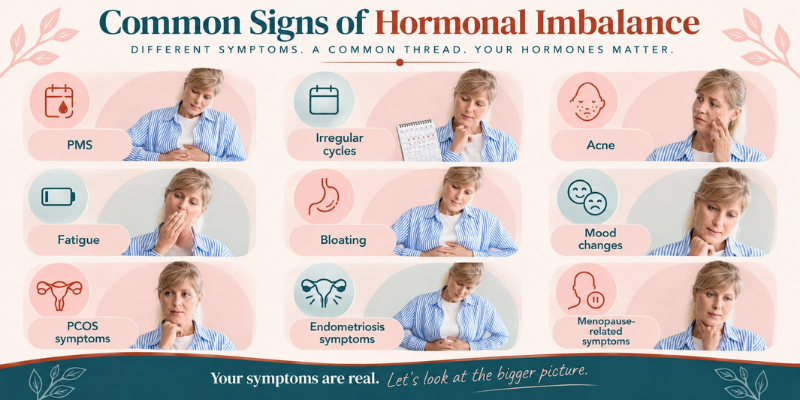
But hormones are complicated.
A symptom such as fatigue or bloating does not automatically tell you which hormone is "imbalanced."
And taking a supplement marketed for hormone balance without understanding what's actually happening may delay a more appropriate evaluation.
For women's health, the better question isn't:
"Which hormone supplement should I take?"
It's:
"What is contributing to my symptoms?"
That shift can completely change the conversation.
Your Gut Health Deserves the Same Attention
The same principle applies to probiotics and digestive supplements.
You may see products promising to:
"Reset" your gut
Eliminate bloating
Restore your microbiome
Support digestion
Improve regularity
But your gut is highly individual.
Digestive symptoms can have many potential causes, and the right approach depends on your symptoms, medical history, diet, medications, and other factors.
Sometimes the answer may involve a supplement.
Sometimes it may involve nutrition.
Sometimes it may require evaluating an underlying gastrointestinal condition.
And sometimes the most important intervention has nothing to do with a supplement.
A supplement should support a plan, not replace one.
What Functional Medicine Looks At Differently
At Credence Functional Health, we don't believe every symptom needs another bottle of supplements.
A functional medicine approach asks a broader question:
What factors may be contributing to the way you're feeling?
Depending on your individual situation, that may include looking at:
Nutrition
Digestive health
Hormones
Blood sugar regulation
Nutrient status
Sleep
Stress
Lifestyle
Inflammation
Medications
Relevant medical conditions
Supplements may be part of that plan when appropriate.
But they are only one tool.
The goal is not to take more. The goal is to take what makes sense for you.
7 Questions to Ask Before Buying a Supplement
Before purchasing your next supplement, ask:
1. Why am I taking this?
What specific goal are you trying to address?
2. Is there evidence supporting this ingredient?
Look for research beyond testimonials and influencer recommendations.
3. Is the dose appropriate?
The amount matters.
4. Do I actually need it?
Testing or professional evaluation may be more useful than guessing.
5. Could it interact with my medications or other supplements?
Always consider the complete picture.
6. Does the product have meaningful quality controls?
Look for transparent labeling and, when available, credible third-party verification.
7. Am I using this instead of addressing the underlying issue?
This may be the most important question of all.
The Bottom Line
Supplements can be useful tools.
But they aren't magic.
And the supplement industry can make it difficult to distinguish good science from good marketing.
The FDA does not pre-approve most dietary supplements for safety and effectiveness before they are marketed, so consumers need to pay attention to product quality, evidence, labeling, dosage, and potential interactions. (U.S. Food and Drug Administration)
You don't need a cabinet full of supplements to be healthy.
You need a plan that makes sense for your body, your symptoms, your health history, and your goals.
At Credence Functional Health, we believe supplements should be used thoughtfully, not automatically.
Before you add another bottle to your routine, ask whether you're addressing the cause or simply managing the symptom.
Ready to Take the Next Step?
If you're taking multiple supplements, struggling with persistent symptoms, or wondering what your body actually needs, you don't have to figure it out alone.
👉 Schedule your consultation today at 320-226-7758 or book a Free Discovery Call.
Follow Credence Functional Health for more insights on gut health, hormones, and women's health:
The best supplement isn't necessarily the one with the biggest promises. It's the one that has a clear purpose and makes sense for your individual health needs.
Frequently Asked Questions
Are dietary supplements FDA approved?
No. The FDA does not approve most dietary supplements for safety and effectiveness before they are marketed. Manufacturers and distributors are responsible for ensuring their products comply with applicable requirements. (U.S. Food and Drug Administration)
Are supplements safe because they are natural?
Not necessarily. Natural ingredients can have biological effects and may interact with medications or other supplements. Your healthcare provider should know about everything you're taking.
How do I know if a supplement is high quality?
Look for transparent labeling, clearly stated ingredients and amounts, appropriate manufacturing practices, and credible third-party verification when available. Programs such as USP Verification provide independent testing and quality assessment. (USP)
Do women need supplements for hormone balance?
Not necessarily. Hormonal symptoms can have many potential contributors. Rather than automatically taking a "hormone balance" supplement, it can be more useful to understand what may be contributing to your symptoms.
Can I take multiple supplements together?
It depends on the specific products, doses, medications, and your health history. Combining multiple supplements can increase the possibility of duplicated ingredients, side effects, or interactions. Discuss your complete supplement list with a qualified healthcare professional.
Meta Description
What should women know before buying supplements? Learn how the supplement industry is regulated, how to evaluate product quality and claims, and why personalized guidance matters.
Suggested Blog Title Variations
What Most Women Don't Know About the Supplement Industry
The Truth About Supplements: What Women Need to Know
Before You Buy Another Supplement, Read This
Supplements: What the Marketing Doesn't Always Tell You
How to Choose Supplements Without Falling for the Hype
Do You Really Need That Supplement? What Women Should Know
Social Media Excerpt
Before you buy another supplement, ask yourself one question:
Do I actually know why I'm taking this?
The supplement industry is huge, and marketing can make almost any product sound essential.
But "natural" doesn't automatically mean safe.
"Clinically studied" doesn't necessarily mean the exact product was studied.
And more ingredients don't necessarily mean better results.
Your supplements should have a purpose.
Read the full blog to learn what to look for before adding another bottle to your routine.

Disclaimer:
This blog is intended for educational purposes only and does not constitute medical advice, diagnosis, or treatment. Hormonal birth control and hormone-related concerns are complex and should be evaluated by a qualified healthcare provider. At Credence Functional Health, we offer Functional Medicine as a complementary, integrative approach—not a replacement for traditional gynecological or mental health care. The strategies discussed in this blog may not be appropriate for every individual. Always consult your physician before making changes to medications, supplements, or health routines. We encourage you to partner with your medical team to ensure a safe, informed transition that supports your overall wellness.


