
The Gut-Brain-Hormone Connection Every Woman Should Understand
The Gut-Brain-Hormone Connection Every Woman Should Understand
You may think of your gut, brain, and hormones as three separate systems.
They aren't.
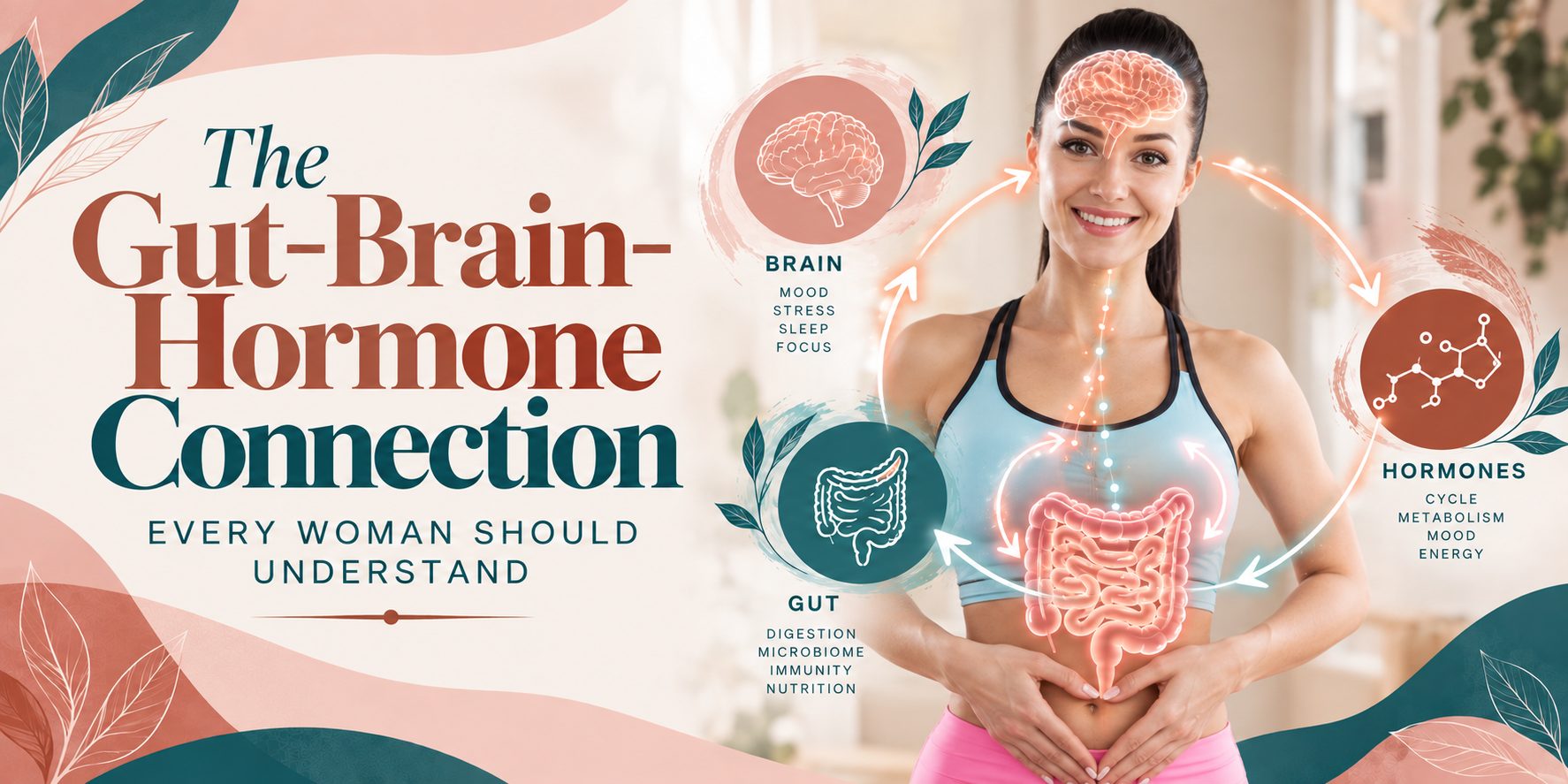
Your digestive system communicates constantly with your nervous system, immune system, and endocrine system. Your hormones can influence your gut, while your gut microbiome can influence hormone metabolism. Stress from the brain can affect digestion, and changes in the gut can send signals back to the brain.
This interconnected relationship is often referred to as the gut-brain axis, but for women, there is an even bigger picture to consider: the gut-brain-hormone connection.
Understanding this connection can help explain why symptoms such as bloating, constipation, fatigue, sleep changes, mood shifts, irregular cycles, cravings, and other hormone-related concerns may not always exist in isolation.
At Credence Functional Health, we believe symptoms deserve context. Rather than looking at one system at a time, functional medicine asks how these systems may be communicating with each other.
Your Gut and Brain Are Constantly Communicating
Your gut isn't simply responsible for digesting food.
It contains an extensive nervous system and communicates with the brain through several pathways, including the vagus nerve, immune signals, hormones, and microbial metabolites. (PMC)
This communication goes in both directions.
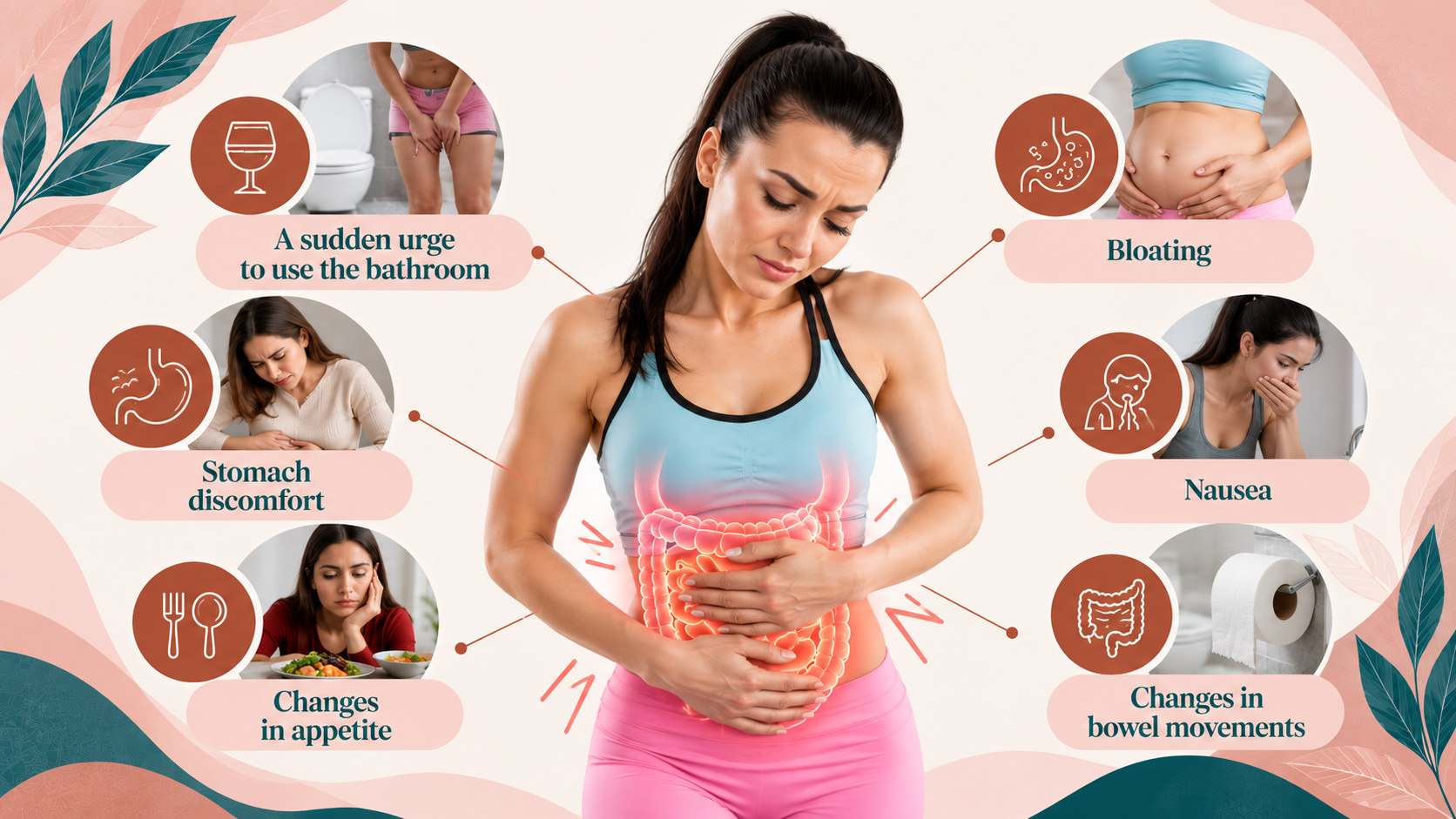
Your brain can influence your digestive system. Think about what happens when you're nervous before an important event. You may experience:
A sudden urge to use the bathroom
Stomach discomfort
Changes in appetite
Bloating
Nausea
Changes in bowel movements
The reverse can happen too. Signals originating in the gut can influence brain function, stress responses, and other physiological processes.
The gut microbiome is part of this communication network. Research suggests that gut microbes and their metabolites can interact with neural, immune, and endocrine pathways involved in the gut-brain connection. (PMC)
This doesn't mean that every mood or digestive symptom is caused by the microbiome. The science is complex, and much of the research is still developing.
But the connection is real enough that the gut deserves a place in the conversation about whole-body health.
Where Hormones Enter the Picture
Now add hormones to the equation.
Hormones influence numerous processes throughout the body, including metabolism, reproduction, sleep, stress responses, appetite, and mood.
And the relationship between hormones and the gut is bidirectional.
In other words:
Hormones can influence the gut, and the gut can influence aspects of hormone metabolism.
One of the clearest examples is estrogen.
Researchers have identified what is known as the estrobolome, a collection of gut bacterial genes involved in estrogen metabolism. Certain microbial enzymes can influence the processing and recycling of estrogen in the body. (PubMed)
This is one reason researchers are increasingly interested in the relationship between the gut microbiome and women's hormonal health.
However, it is important to keep this in perspective.
There is currently no single "ideal" gut microbiome for every woman, and research has not established that changing the microbiome alone can correct hormonal conditions. Recent research also shows substantial variability between individuals and populations. (PMC)
The gut is one piece of a much larger hormonal picture.
Estrogen and the Gut: A Two-Way Relationship
Estrogen changes throughout a woman's life.
Puberty, pregnancy, the menstrual cycle, perimenopause, and menopause all involve significant hormonal changes.
Those hormonal changes can also coincide with changes in the gut microbiome.
During menopause, for example, declining estrogen is associated with changes in physiology throughout the body, and researchers are investigating how those changes interact with the gut microbiome. (PubMed)
At the same time, gut bacteria participate in estrogen metabolism.
This means the relationship isn't simply:
Estrogen → gut
It can also involve:
Gut microbiome → estrogen metabolism → systemic hormonal environment
That doesn't mean gut health determines your estrogen levels or that every hormone symptom is caused by dysbiosis.
It means the systems are interconnected.
And that matters when you're trying to understand the bigger picture.
What About Cortisol and Stress?
This is where the brain becomes especially important.
When your brain perceives stress, your body activates the hypothalamic-pituitary-adrenal, or HPA, axis. This system helps coordinate your stress response and involves the release of cortisol.
The gut and HPA axis communicate in both directions.
Stress can affect gastrointestinal function and the gut microbiome, while signals from the gut can interact with neuroendocrine pathways involved in stress regulation. (PMC)
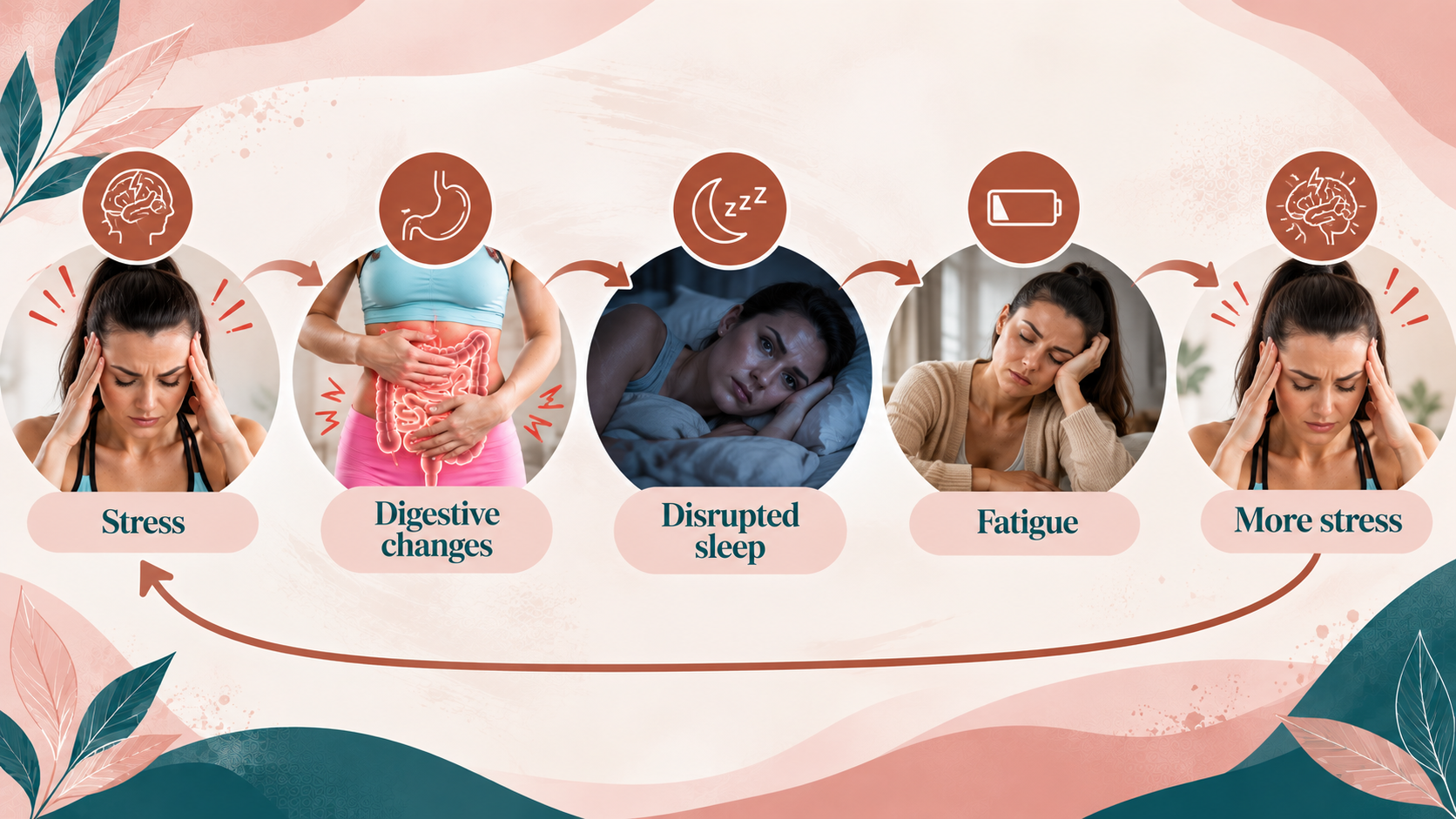
This may help explain why prolonged periods of stress can coincide with digestive symptoms.
You might notice:
Or:
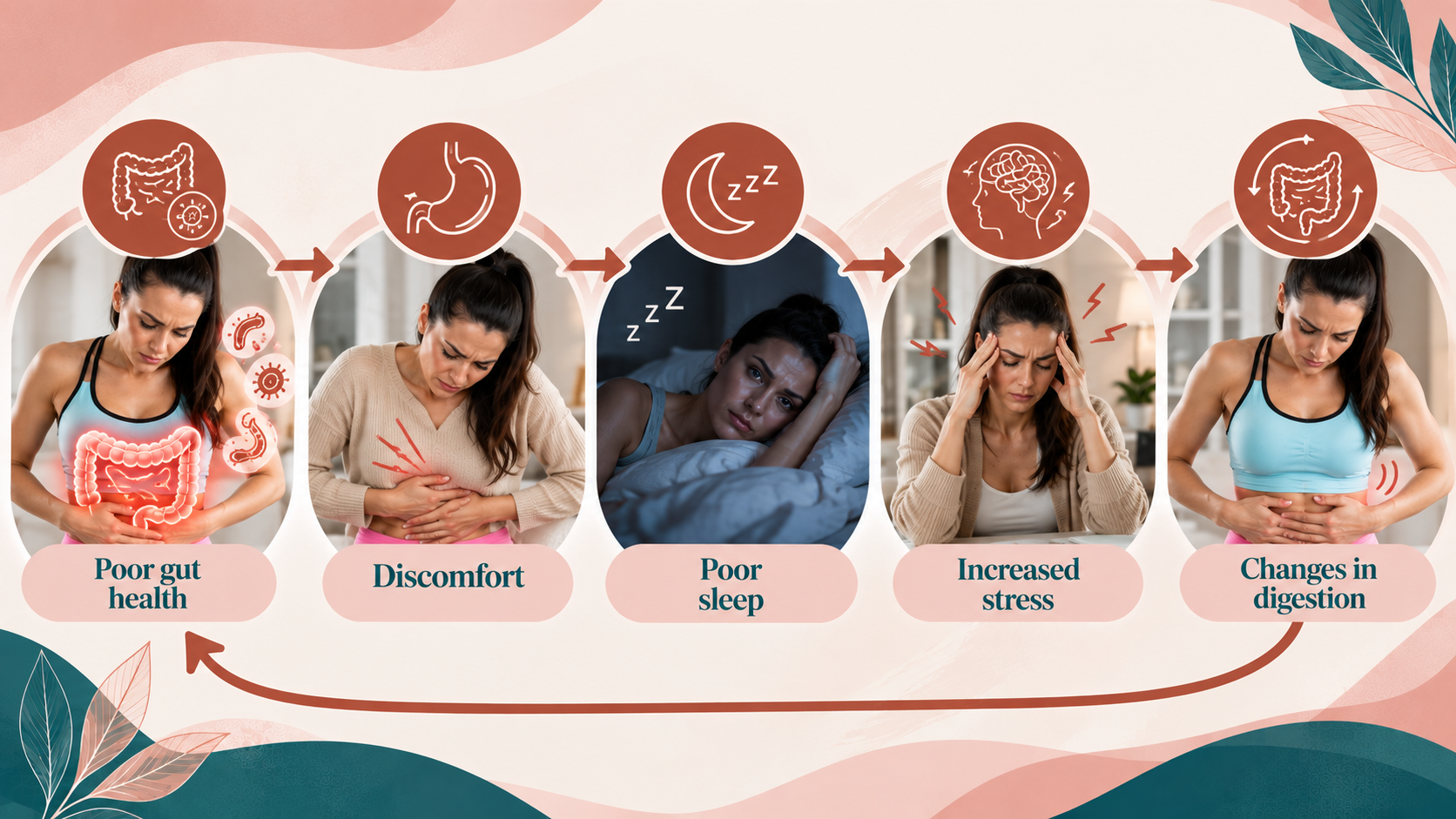
The body doesn't always operate in a straight line.
It operates in interconnected feedback loops.
The Gut-Brain-Hormone Connection and Women's Symptoms
This connection becomes especially interesting when you experience several seemingly unrelated symptoms at once.
For example:
Digestive symptoms
Bloating
Constipation
Diarrhea
Gas
Abdominal discomfort
Changes in bowel habits
Hormonal symptoms
Irregular cycles
PMS
Changes in menstrual flow
Acne
Hot flashes
Changes in appetite
Weight changes
Brain and nervous system symptoms
Difficulty concentrating
Mood changes
Feeling stressed
Poor sleep
Fatigue
These symptoms can have many different causes, and they should not automatically be attributed to gut dysfunction or hormonal imbalance.
But when symptoms overlap across multiple systems, it can be useful to step back and ask:
What else is happening in the body?
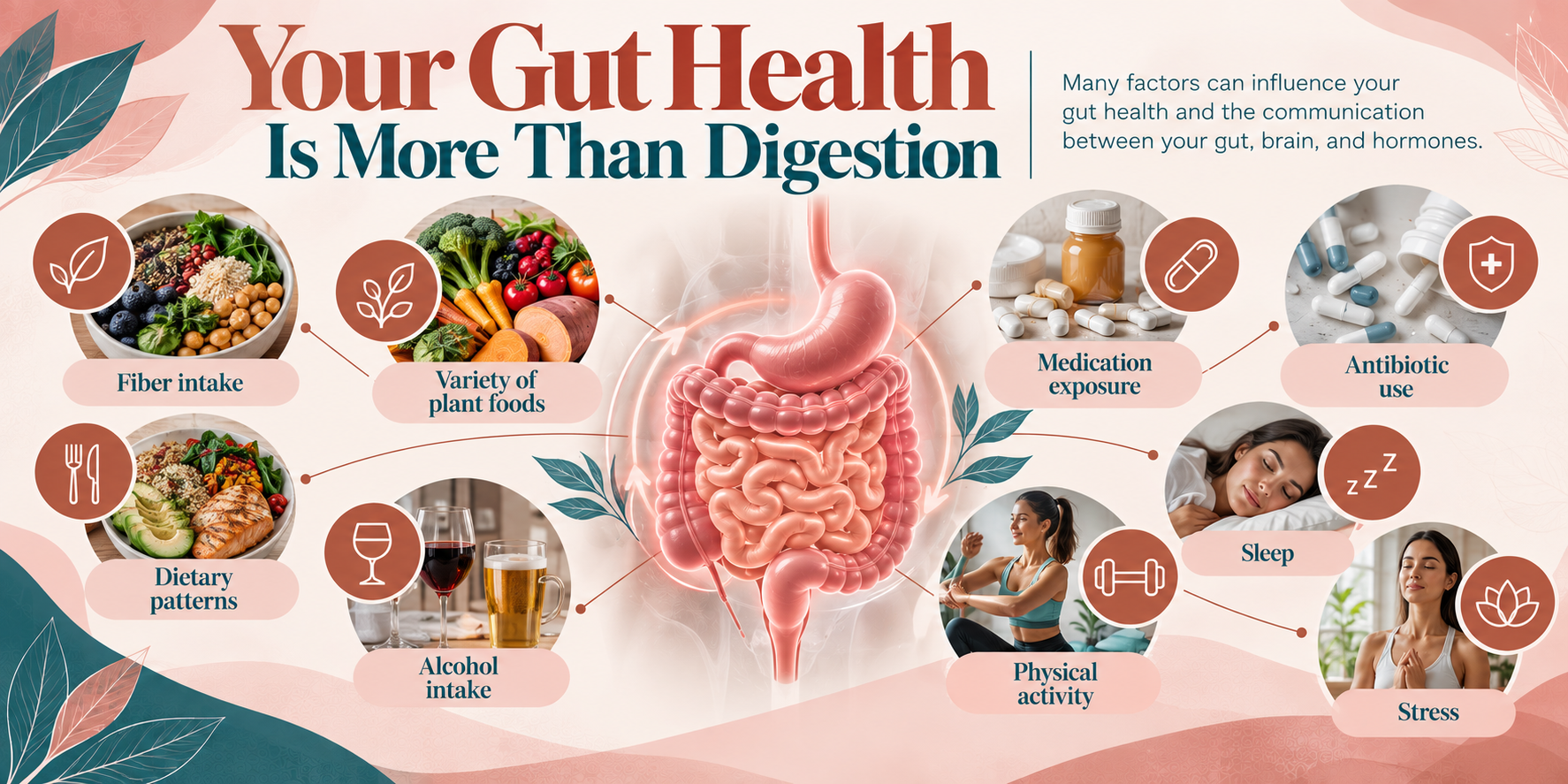
Your Gut Health Is More Than Digestion
Your gut microbiome interacts with the immune system, nervous system, metabolism, and endocrine pathways.
Gut microbes also produce metabolites, including short-chain fatty acids, that can participate in communication between the gut and other tissues. (PubMed)
This is one reason nutrition can have effects that extend far beyond digestion.
Your diet helps shape the environment in which your gut microbes live.
Factors such as:
Fiber intake
Variety of plant foods
Dietary patterns
Alcohol intake
Medication exposure
Antibiotic use
Sleep
Physical activity
Stress
can all influence different aspects of gut health and microbial composition.
There isn't one perfect diet or one supplement that creates the same outcome for every person.
Your individual health history matters.
What Can You Do to Support the Gut-Brain-Hormone Connection?
You don't need to overhaul your entire life overnight.
Start with the fundamentals.
1. Eat more dietary fiber
Fiber-rich foods help support a diverse gut environment.
Think vegetables, fruits, legumes, whole grains, nuts, and seeds.
2. Increase plant diversity
Instead of eating the same few vegetables every week, gradually introduce more variety.
Different plant foods provide different fibers and compounds that interact with the microbiome.
3. Prioritize adequate protein and whole foods
Your body needs adequate nutrients to support metabolism, hormones, muscle, immune function, and tissue repair.
4. Protect your sleep
Sleep affects stress regulation, metabolism, appetite, and overall health. It is also closely connected to the gut-brain axis.
5. Pay attention to stress
Stress management isn't just about feeling calmer.
Because the brain and gut communicate through neuroendocrine, immune, and neural pathways, supporting your stress response is part of supporting whole-body health. (PMC)
6. Don't automatically reach for supplements
Probiotics, prebiotics, digestive enzymes, and other supplements may have a role in certain situations, but more isn't always better.
The right approach depends on the individual, the symptoms, and the underlying context.
Why We Look at the Whole Picture
When a woman comes in with fatigue, bloating, irregular cycles, sleep problems, or changes in weight, it's tempting to focus on whichever symptom feels most frustrating.
But your body doesn't work in isolated departments.
Your gut communicates with your brain.
Your brain influences your stress response.
Your hormones interact with your gut environment.
Your gut microbiome participates in hormone metabolism.
And your nutrition, sleep, stress, medications, lifestyle, and environment can influence multiple systems at the same time.
That's why functional medicine takes a systems-based approach.
Instead of asking only:
"What symptom do you have?"
We also want to understand:
"What might be contributing to the pattern we're seeing?"
That doesn't mean assuming every symptom has one hidden root cause. It means taking the time to look at the complete picture.
When Should You Take a Closer Look?
If you're consistently experiencing symptoms such as digestive changes, fatigue, irregular cycles, sleep disruption, mood changes, or unexplained changes in appetite or weight, consider discussing them with a qualified healthcare professional.
Especially when several symptoms occur together, keeping track of when they occur, how long they've been present, and what seems to influence them can provide useful information.
Your symptoms are not necessarily proof of a gut problem or hormone imbalance.
But they are information.
And that information deserves to be heard.
The Bottom Line
The gut-brain-hormone connection is a powerful reminder that your body is an interconnected system.
The gut communicates with the brain. The brain influences the gut. Hormones interact with both. And the microbiome participates in several of these pathways.
Research is continuing to uncover exactly how these relationships work, particularly in women's health.
What we know today is enough to recognize that gut health, stress, brain health, and hormonal health should not always be viewed as completely separate conversations. (PMC)
At Credence Functional Health, we look beyond isolated symptoms to understand the bigger picture and help women make informed decisions about their health.
Your gut, brain, and hormones are constantly communicating. When symptoms cross multiple systems, looking at the connections may provide valuable insight into your overall health.
Frequently Asked Questions
Can gut health affect hormones?
The gut microbiome participates in hormone metabolism, including estrogen metabolism. However, gut health is only one factor involved in hormonal regulation, and more research is needed to understand the clinical significance of specific microbiome changes. (PubMed)
Can stress affect gut health?
Yes. Stress and activation of the HPA axis can influence gastrointestinal function and interact with the gut microbiome. The relationship works in both directions. (PMC)
Does a gut imbalance cause hormone imbalance?
Not necessarily. Gut microbiome changes have been associated with aspects of hormone metabolism, but there is no single microbiome profile that defines hormonal health, and researchers are still working to understand cause and effect. (PMC)
Should every woman take a probiotic?
No. Probiotics are not one-size-fits-all. Different strains can have different effects, and evidence for specific women's health outcomes is still developing. A personalized approach is generally more appropriate than automatically taking a probiotic.
What is the estrobolome?
The estrobolome refers to the collection of gut bacterial genes involved in estrogen metabolism. These microbial enzymes can influence how estrogen is processed and recirculated in the body. (PubMed)
👉 Schedule your consultation today at 320-226-7758 or book a Free Discovery Call.

Disclaimer:
This blog is intended for educational purposes only and does not constitute medical advice, diagnosis, or treatment. Hormonal birth control and hormone-related concerns are complex and should be evaluated by a qualified healthcare provider. At Credence Functional Health, we offer Functional Medicine as a complementary, integrative approach—not a replacement for traditional gynecological or mental health care. The strategies discussed in this blog may not be appropriate for every individual. Always consult your physician before making changes to medications, supplements, or health routines. We encourage you to partner with your medical team to ensure a safe, informed transition that supports your overall wellness.


