
Everyday Hormone Disruptors That May Be Affecting Your Health

Everyday Hormone Disruptors That May Be Affecting Your Health
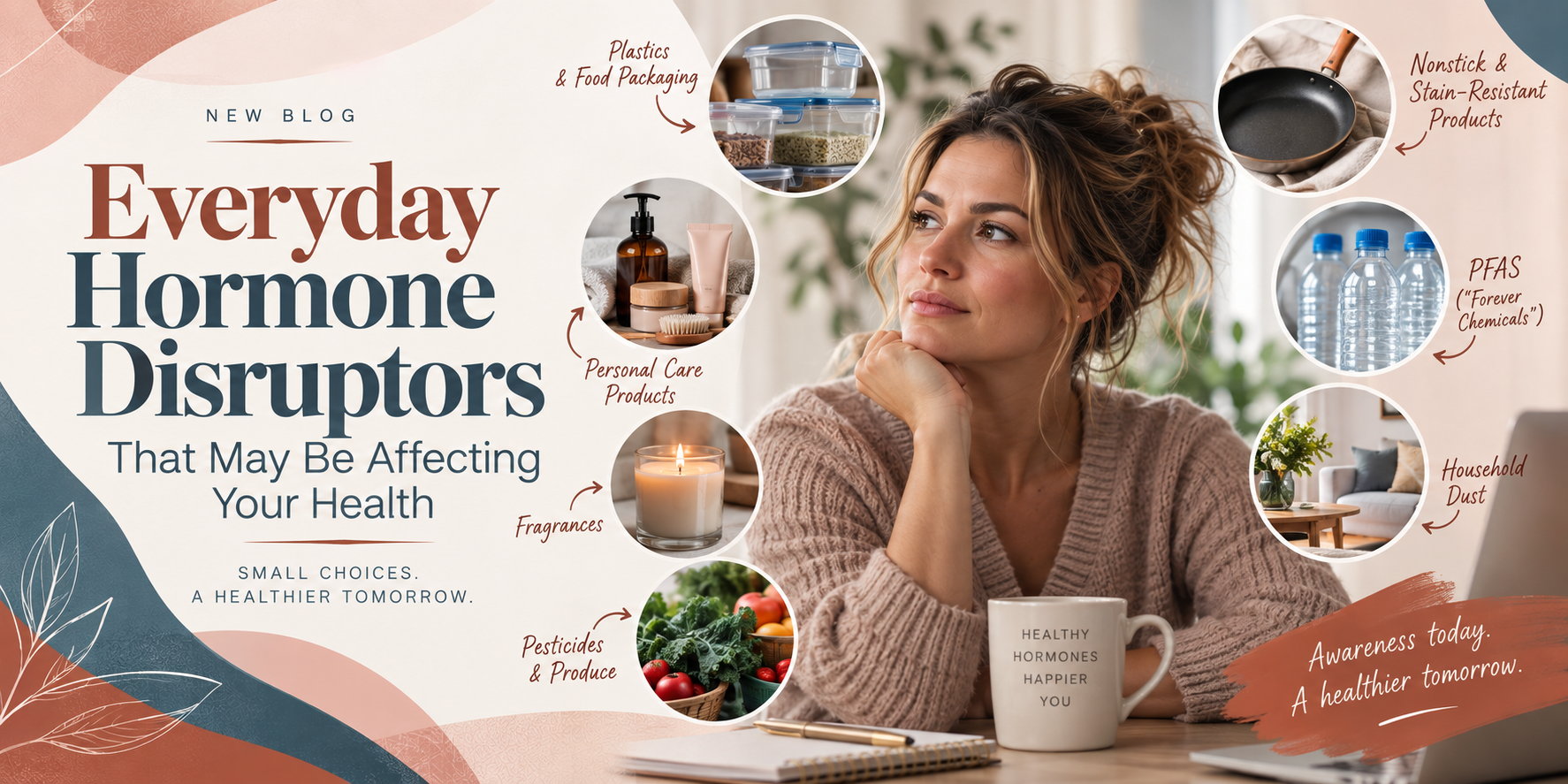
You may think of hormone disruptors as something found in an industrial setting or a chemical spill.
But some endocrine-disrupting chemicals can be found in products and environments we encounter every day: food packaging, personal care products, cosmetics, plastics, pesticides, household products, and even dust. (Endocrine Society)
That does not mean every exposure will cause a hormone problem. In fact, scientists are still working to understand how specific chemicals, doses, timing, and combinations of exposures affect individual health.
But the growing research is one reason it is worth becoming more aware of what you are exposed to regularly.
For women especially, this conversation matters because hormones influence far more than reproductive health. They help regulate metabolism, thyroid function, bone health, mood, sleep, reproduction, and many other processes throughout the body.
So, what are the everyday exposures worth knowing about?
What Are Endocrine-Disrupting Chemicals?
Endocrine-disrupting chemicals, or EDCs, are substances that can interfere with hormone action.
They may affect how hormones are produced, transported, metabolized, or how they interact with receptors in the body. The Endocrine Society identifies several categories of potential EDCs, including certain pesticides, plastics and plastic additives, food-contact materials, cosmetics, and other consumer-product chemicals. (Endocrine Society)
Importantly, exposure does not automatically mean harm.
The CDC notes that detecting an environmental chemical or its metabolite in blood or urine does not by itself establish that the exposure caused a disease or health condition. (CDC)
The goal isn't to become afraid of every product in your home.
The goal is to understand where exposure can occur and make reasonable choices that may reduce unnecessary exposure.
1. Plastics and Food Packaging
One of the most familiar examples is bisphenol A, or BPA.
BPA has been used in certain polycarbonate plastics and epoxy resins, including some food and beverage containers and can linings. The general population can be exposed primarily through diet, and BPA has been detected widely in biomonitoring studies. (CDC)
There are also other bisphenols and plastic additives, so simply seeing "BPA-free" on a product does not necessarily mean there are no chemicals of concern.
Simple ways to reduce exposure:
Use glass or stainless-steel containers when practical.
Avoid heating food in plastic containers unless the product is specifically designed for that use.
Store leftovers in glass when possible.
Reduce reliance on heavily packaged foods.
Choose fresh or minimally packaged foods more often.
You don't have to throw away every plastic container in your kitchen overnight.
Small substitutions can add up.
2. Personal Care Products and Cosmetics
Your morning routine may involve several products before you even leave the house.
Think:
Shampoo → conditioner → moisturizer → makeup → fragrance → deodorant → hair products.
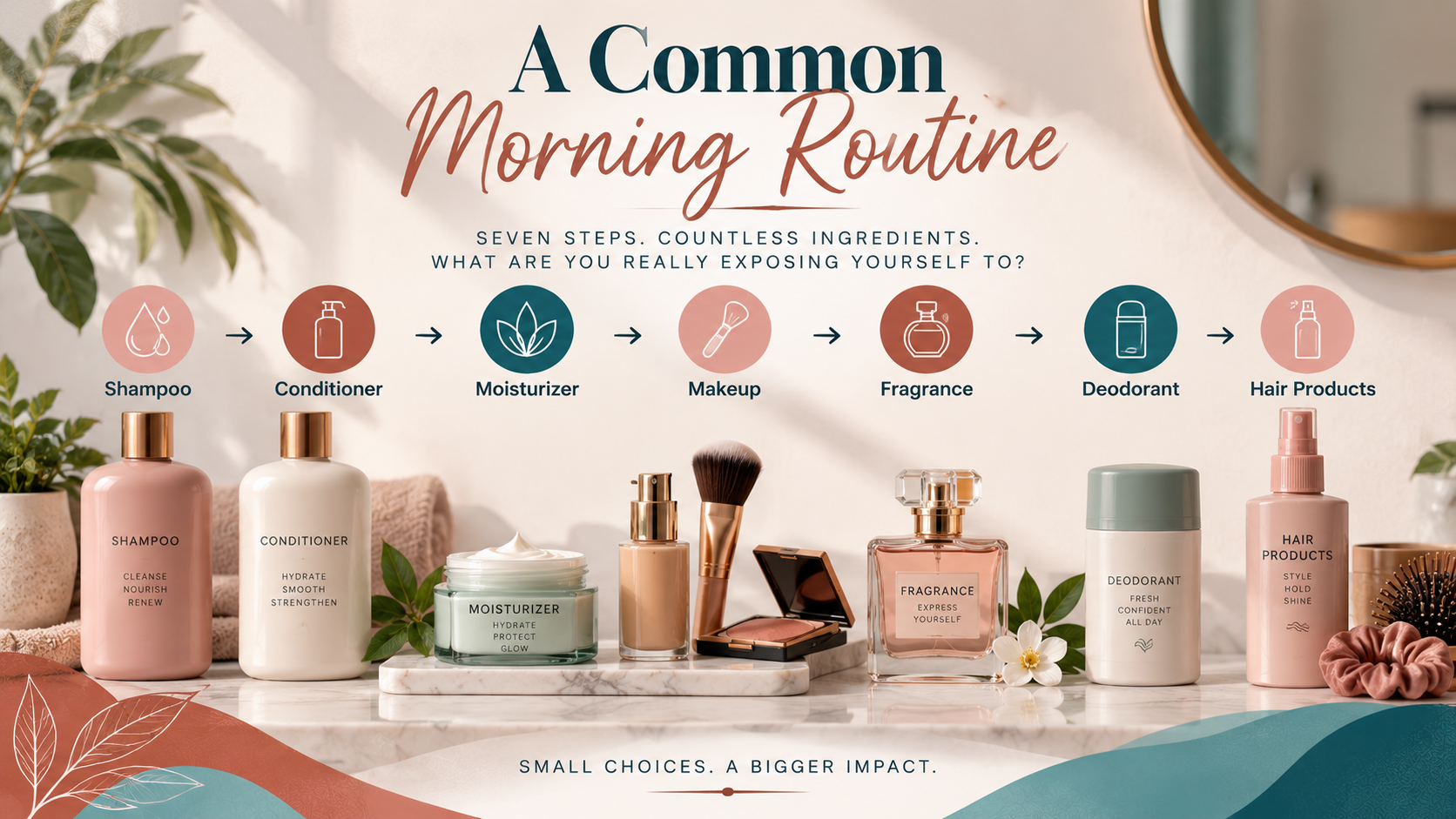
Some personal care products can contain chemicals such as phthalates and other substances that are being studied for endocrine-disrupting properties. Phthalates have been used in personal care products, plastics, packaging, and other consumer products. (Endocrine Society)
Research into women’s reproductive health has also examined potential associations between exposure to chemicals such as phthalates and reproductive outcomes. However, the evidence varies by chemical, exposure level, outcome, and study design. (PubMed Central (PMC))
What can you do?
You don't need a 12-step "chemical detox."
Instead, consider simplifying.
Choose fragrance-free products when practical.
Read ingredient labels.
Replace products gradually instead of throwing everything away.
Look for transparent ingredient lists.
Consider reducing the number of personal care products you use every day.
Less exposure is different from zero exposure.
The goal is practical reduction, not perfection.
3. Fragrance
Fragrance can be one of the more complicated categories because "fragrance" or "parfum" can represent a mixture of ingredients rather than a single substance.
Fragrance can appear in:
Perfume
Body sprays
Lotions
Candles
Air fresheners
Laundry products
Cleaning products
Hair products
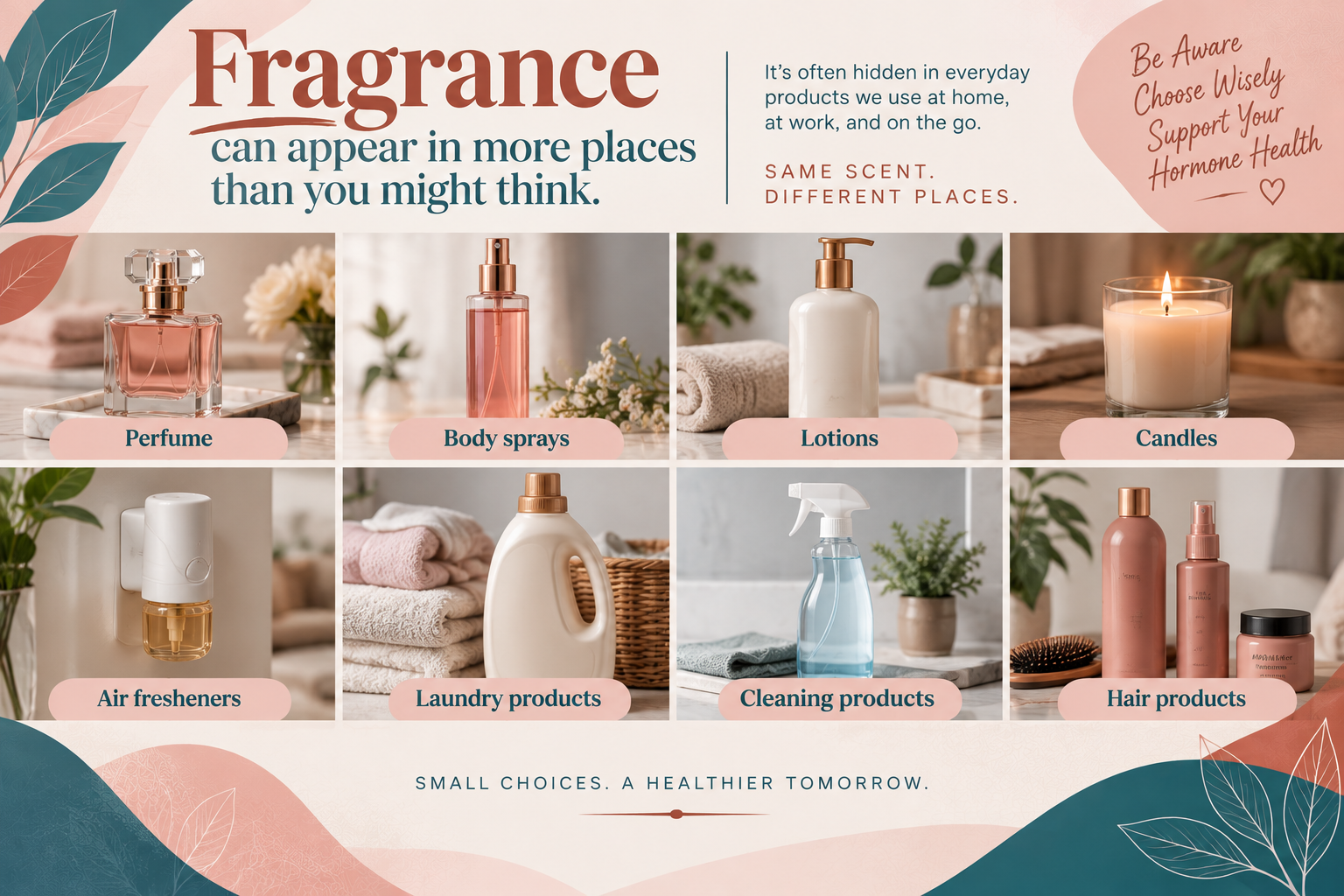
Some fragrance-related chemicals have been studied for potential endocrine effects, although the health implications vary considerably by chemical and level of exposure.
If you're trying to reduce your overall chemical exposure, fragrance is one area where you can make a relatively simple change.
Try choosing fragrance-free or lower-fragrance options for products you use frequently.
4. Pesticides and Produce
Pesticides are another important category of environmental exposure.
Some pesticides can interact with endocrine systems, which is why pesticides are included among the chemicals studied as potential endocrine disruptors. (Endocrine Society)
That doesn't mean you should stop eating fruits and vegetables.
In fact, fruits and vegetables provide important fiber, vitamins, minerals, and other beneficial compounds.
Instead, focus on practical food-handling habits:
Wash produce thoroughly.
Vary the types of fruits and vegetables you eat.
Consider purchasing organic for foods you eat frequently if it fits your budget.
Grow herbs or vegetables when practical.
Follow food-safety recommendations for washing and preparation.
You do not need to eliminate every possible exposure to make healthier choices.
5. PFAS: The "Forever Chemicals"
You've probably heard the term PFAS, short for per- and polyfluoroalkyl substances.
PFAS are a large group of chemicals known for their persistence in the environment and their use in products that resist heat, oil, grease, stains, and water.
Some PFAS have been studied for potential endocrine and reproductive effects. Research into female reproduction has found associations in some studies, although results are not uniform and researchers continue to investigate the mechanisms and long-term effects. (PubMed Central (PMC))
PFAS exposure can come from multiple environmental and consumer sources, which makes completely avoiding them difficult.
Practical steps can include being mindful of products marketed as highly stain-resistant, water-resistant, or nonstick and following current public health guidance about drinking water in areas with known PFAS contamination.
6. Household Dust
Here's one people often overlook:
Your home collects chemicals.
Household dust can contain residues from plastics, furniture, personal care products, flame retardants, pesticides, and other materials.
Phthalates, for example, can be present in household dust as well as consumer products. (Endocrine Society)
This doesn't mean your home is toxic.
It means that simple cleaning habits can be useful.
Consider:
Regularly dusting surfaces.
Vacuuming floors and carpets.
Washing your hands before eating.
Removing shoes at the door.
Keeping your home adequately ventilated.
These are relatively simple habits that can help reduce exposure to a variety of environmental contaminants.
7. Nonstick and Stain-Resistant Products
Some chemicals used to create nonstick, stain-resistant, or water-resistant properties belong to the broader PFAS family.
These chemicals are particularly important because some PFAS can persist in the environment and the human body for extended periods. (PubMed Central (PMC))
If you're replacing cookware or household items, you can gradually look for alternatives that do not rely on these treatments.
Again, there is no need to panic about everything you already own.
Think replacement over time, not immediate elimination.
Can Hormone Disruptors Cause Hormonal Imbalance?
This is where nuance matters.
Research supports the biological plausibility that certain endocrine-disrupting chemicals can interfere with hormone signaling. Studies have examined relationships between EDC exposure and reproductive, metabolic, thyroid, and other endocrine outcomes. (Endocrine Society)
But it would be inaccurate to say:
"You have a hormone imbalance because of toxins in your environment."
Hormone health is much more complicated than that.
Sleep, nutrition, stress, genetics, age, medications, physical activity, underlying health conditions, and reproductive stage can all influence endocrine function.
And the evidence for specific chemicals and specific health outcomes varies.
For women, research has explored associations between EDC exposure and reproductive outcomes such as altered ovarian function, fertility, menstrual regulation, and reproductive aging, but researchers continue to identify important gaps in our understanding. (PubMed Central (PMC))
That's why it is better to think about environmental exposure as one piece of the larger health picture, rather than the explanation for every symptom.
What Can You Do Without Becoming Overwhelmed?
You don't need to replace your entire home.
Start with the things you use every day.
Try the "replace what you use most" approach:
Food storage:
Move frequently used plastic containers toward glass or stainless steel.
Personal care:
Start with products you use daily, such as moisturizer, deodorant, or body products.
Drinks:
Use a reusable stainless-steel or glass bottle.
Cleaning:
Choose simpler products and reduce unnecessary fragrance when practical.
Food:
Wash produce thoroughly and prioritize a varied, nutrient-dense diet.
Home:
Vacuum and dust regularly, especially if you have significant household dust accumulation.
Cookware:
Replace worn or damaged nonstick cookware gradually rather than replacing everything at once.
The objective isn't a chemically perfect lifestyle.
It's reducing unnecessary exposure where you realistically can.
Your Hormones Are Part of a Bigger System
Hormone health isn't just about estrogen or progesterone.
Your endocrine system communicates with your thyroid, adrenal system, reproductive organs, brain, liver, gut, and metabolic pathways.
That is one reason symptoms such as:
Irregular cycles
PMS
Fatigue
Changes in weight
Acne
Sleep problems
Mood changes
Hot flashes
Changes in appetite
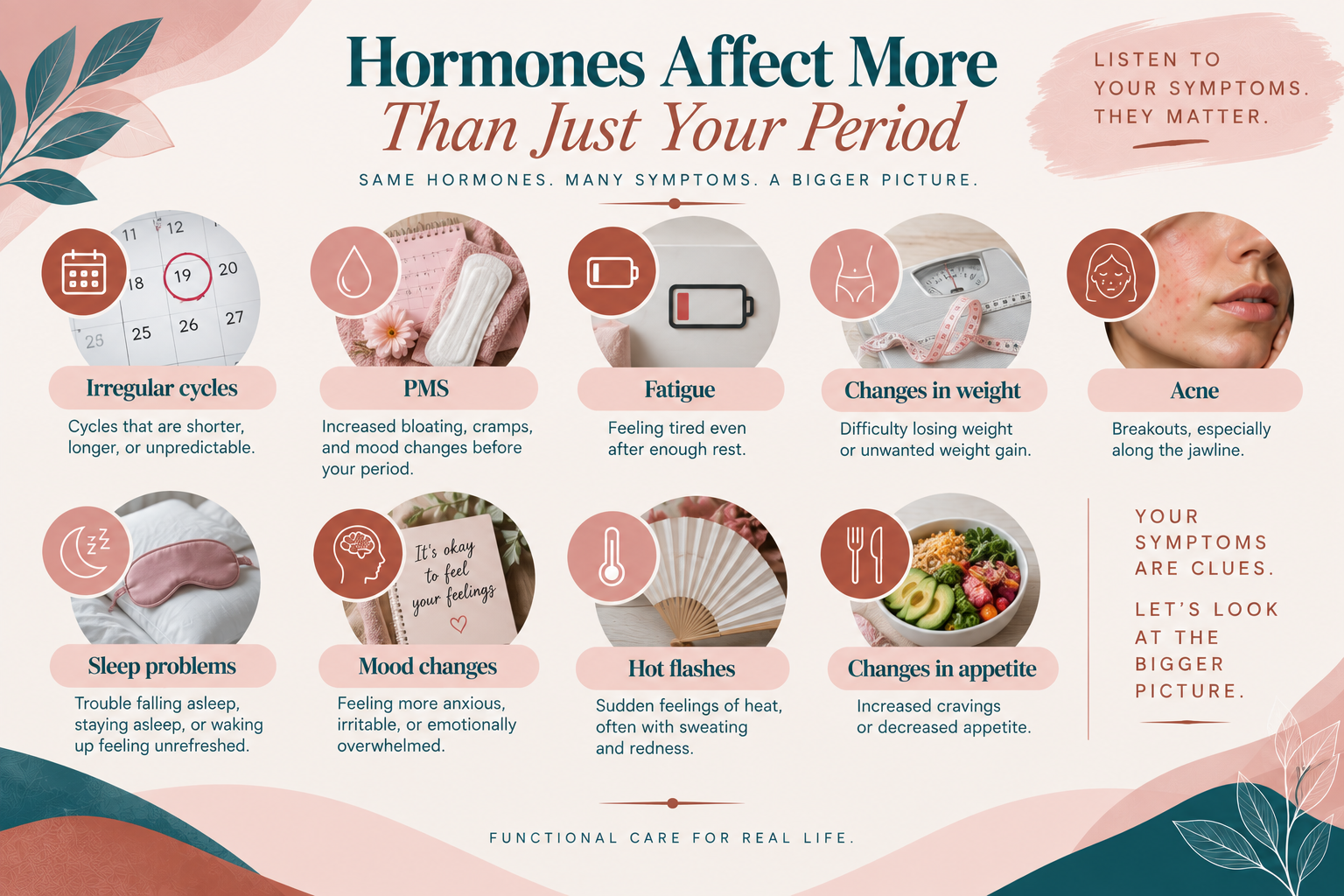
deserve a broader conversation.
Environmental exposures may be one factor worth considering, but they should not automatically be blamed for these symptoms.
At Credence Functional Health, we look at the bigger picture rather than assuming that one symptom has one cause.
The Bottom Line
You don't need to live in fear of chemicals.
You also don't need to ignore the growing body of research around endocrine-disrupting chemicals.
The practical middle ground is awareness without obsession.
Start with the products you use most often. Make a few realistic substitutions. Prioritize nutrition, sleep, movement, stress management, and other foundational aspects of health.
And remember:
Reducing exposure is about progress, not perfection.
Your hormones don't exist in isolation.
Neither does your environment.
FAQ
What are the most common endocrine-disrupting chemicals?
Commonly studied groups include bisphenols such as BPA, phthalates, PFAS, certain pesticides, and other chemicals used in plastics, food-contact materials, personal care products, and consumer goods. (Endocrine Society)
Does BPA-free mean a product is completely free of hormone-disrupting chemicals?
Not necessarily. "BPA-free" specifically refers to BPA. Products may use other bisphenols or different materials, so the label does not mean that the product is free from all chemicals of potential endocrine concern.
Should I throw away all my plastic containers?
No. A more practical approach is to gradually replace frequently used food-storage containers with glass or stainless steel, especially when practical.
Can endocrine disruptors cause infertility?
Research has identified associations between certain EDC exposures and reproductive outcomes, including fertility-related outcomes, but the evidence varies substantially by chemical and exposure. It would be inaccurate to assume that EDC exposure is the cause of infertility in an individual. (PubMed Central (PMC))
How can I reduce my exposure to hormone disruptors?
Start with simple changes: reduce unnecessary use of plastics for food storage and heating, simplify personal care products, reduce unnecessary fragrance, wash produce, clean household dust regularly, and make gradual product substitutions.
Can hormone disruptors affect menopause?
Research is investigating relationships between EDC exposure and reproductive aging and menopausal timing. Some studies have reported associations, but this is an evolving area of research and does not mean that environmental exposure determines when an individual will reach menopause. (PubMed Central (PMC))
You don't have to eliminate every chemical from your life. Start by reducing unnecessary exposures from the products you use most often and focus on the bigger picture of hormone health.

Disclaimer:
This blog is intended for educational purposes only and does not constitute medical advice, diagnosis, or treatment. Hormonal birth control and hormone-related concerns are complex and should be evaluated by a qualified healthcare provider. At Credence Functional Health, we offer Functional Medicine as a complementary, integrative approach—not a replacement for traditional gynecological or mental health care. The strategies discussed in this blog may not be appropriate for every individual. Always consult your physician before making changes to medications, supplements, or health routines. We encourage you to partner with your medical team to ensure a safe, informed transition that supports your overall wellness.


