
What Every Woman Should Know About Leaky Gut: The Hidden Connection Between Your Gut, Hormones, and Health
What Every Woman Should Know About Leaky Gut: The Hidden Connection Between Your Gut, Hormones, and Health
Have you ever wondered why you feel bloated after certain meals, struggle with irregular digestion, experience unexplained fatigue, or notice that your symptoms seem to change with your menstrual cycle?
You may have been told that these symptoms are simply part of being a busy woman, getting older, or dealing with stress. But your body may be trying to tell you something.
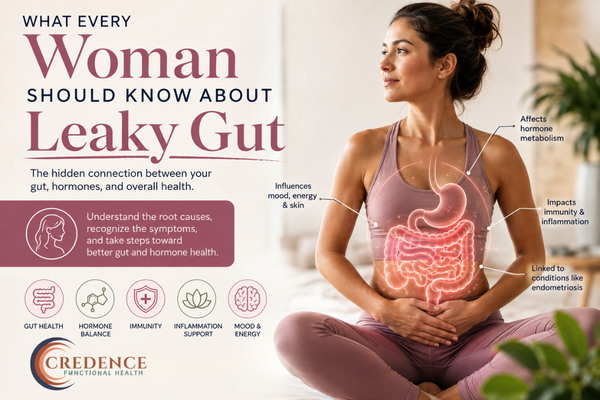
Your gut does much more than digest food. It plays an important role in nutrient absorption, immune function, inflammation, hormone metabolism, and communication between the gut and brain.
One area receiving increasing attention is the health of the intestinal barrier. When this barrier becomes more permeable than it should be, it is commonly referred to as "leaky gut." The medical term is increased intestinal permeability.
For women, understanding gut health can be especially important because the gut interacts with hormones, the immune system, inflammation, and overall women's health.
At Credence Functional Health, we believe symptoms deserve more than a quick explanation. They deserve a closer look at the factors that may be contributing to them.
What Is Leaky Gut?
Think of your intestinal lining as a protective security system.
The lining of your digestive tract is designed to allow nutrients and water to pass through while helping prevent potentially harmful substances from crossing into the body's tissues.
Special structures called tight junctions help regulate the space between intestinal cells. When these structures and other components of the intestinal barrier become disrupted, intestinal permeability can increase. (PubMed Central (PMC))
This does not mean that your intestines literally develop large holes, as the popular phrase "leaky gut" sometimes suggests.
Instead, increased intestinal permeability refers to changes in how the intestinal barrier regulates what passes between the intestinal cells.
Research has linked intestinal barrier dysfunction with several gastrointestinal and inflammatory conditions. However, the relationship is complex. In some situations, impaired barrier function may contribute to disease, while in others it may occur as a result of inflammation or another underlying condition. (PubMed Central (PMC))
That distinction is important.
Leaky gut should not be used as an explanation for every health concern. A comprehensive evaluation is much more useful than assuming one condition is responsible for every symptom.
Why Gut Health Matters for Women
Your gut does not operate independently from the rest of your body.
Your digestive system communicates with your immune system, nervous system, metabolic system, and endocrine system. Your gut microbiome also plays a role in processing and metabolizing various compounds in the body, including estrogen.
This makes gut health an important consideration in women's health.
Your body must process and eliminate hormones efficiently. The gut and liver work together as part of this process, while gut bacteria can influence estrogen metabolism.
This does not mean that poor gut health automatically causes hormonal imbalance. However, it does show why digestive health may be one piece of a larger picture when a woman is experiencing hormonal or inflammatory symptoms.
Common Signs of Gut Dysfunction
There is no single symptom that proves you have increased intestinal permeability. Many digestive and non-digestive symptoms can have several possible causes.
However, recurring symptoms may be a reason to take a closer look at your gut health.
Digestive symptoms may include:
Frequent bloating
Gas
Constipation
Diarrhea
Alternating constipation and diarrhea
Abdominal discomfort
Changes in bowel habits
Feeling overly full after eating
Difficulty tolerating certain foods
You may also notice symptoms outside your digestive system, including:
Persistent fatigue
Brain fog
Headaches
Skin concerns
Mood changes
Difficulty maintaining energy
Inflammatory symptoms
Difficulty managing weight
Hormonal symptoms
These symptoms do not necessarily mean you have "leaky gut." They are simply signals that deserve context.
What Can Contribute to Poor Gut Health?
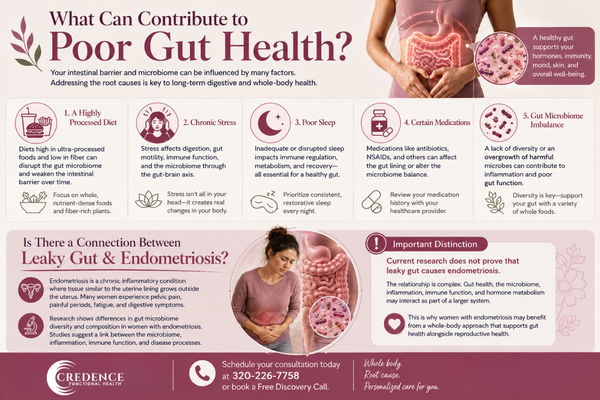
Gut dysfunction rarely has one single cause. Your intestinal barrier and microbiome can be influenced by nutrition, stress, sleep, medications, infections, lifestyle, and other factors.
A Highly Processed Diet
Your gut bacteria thrive on a diverse range of nutrients, particularly fiber from whole plant foods.
A diet consistently high in ultra-processed foods and low in fiber may negatively affect the gut microbiome and overall digestive health.
This does not mean you need to follow a perfect diet. Instead, focus on your overall eating pattern and gradually increase nutrient-dense, minimally processed foods.
Chronic Stress
Your brain and digestive system communicate constantly through the gut-brain axis.
Chronic stress can influence digestion, intestinal motility, immune activity, and the gut microbiome.
This is why you may notice more bloating, changes in bowel habits, or digestive discomfort during periods of significant stress.
Stress is not "all in your head." It can produce very real physiological changes throughout the body.
Poor Sleep
Sleep is essential for immune regulation, metabolism, stress management, and recovery.
Consistently inadequate or disrupted sleep can affect many systems involved in maintaining overall health, including the gut.
If you are trying to improve your digestive health, sleep should not be overlooked.
Certain Medications
Some medications can affect the gastrointestinal tract or alter the gut microbiome. Antibiotics are one well-known example.
This does not mean you should avoid medications that are medically necessary. Instead, your medication history should be considered when evaluating your overall health.
Gut Microbiome Imbalance
Your gut microbiome is a complex ecosystem containing trillions of microorganisms.
The goal is not simply to have "more good bacteria." A healthy gut depends on a balanced and diverse microbial community.
Diet, stress, illness, medications, and lifestyle can all influence your microbiome.
Is There a Connection Between Leaky Gut and Endometriosis?
This is an important question for many women.
Endometriosis is a chronic inflammatory condition in which tissue similar to the lining of the uterus grows outside the uterus. Women with endometriosis may experience pelvic pain, painful periods, digestive symptoms, fatigue, and other concerns.
Researchers are increasingly studying the relationship between endometriosis and the gut microbiome.
A 2025 systematic review and meta-analysis examining 11 studies involving more than 1,700 women found differences in gut microbiota diversity and composition among women with endometriosis compared with control groups. (PubMed)
A previous systematic review also found evidence of an altered gut microbiome in women with endometriosis and highlighted potential relationships involving inflammation, immune function, and disease processes. (PubMed)
But there is an important distinction:
Current research does not prove that leaky gut causes endometriosis.
The relationship is more complicated. Gut health, the microbiome, inflammation, immune function, and hormone metabolism may interact as part of a larger system.
This is why women with endometriosis may benefit from looking beyond reproductive symptoms alone and considering the health of the whole body.
How Functional Medicine Looks at Gut Health
This is where functional medicine can provide a different perspective.
Rather than asking only, "What symptom are you experiencing?" we also ask:
"What could be contributing to this pattern?"
At Credence Functional Health, we consider your individual health history and the connections between different systems.
Depending on your concerns, this may include looking at:
Digestive symptoms
Hormonal and menstrual history
Nutrition
Sleep
Stress
Medications and supplements
Lifestyle
Previous infections
Laboratory findings
Personal and family health history
When appropriate, additional testing may help provide more information.
The goal is not to order every test available. The goal is to gather meaningful information that can help guide an individualized plan.
5 Ways to Support Your Gut Health
You do not need to completely change your lifestyle overnight.
Start with the basics.
1. Eat More Whole Foods
Focus on vegetables, fruits, quality proteins, healthy fats, legumes, nuts, seeds, and other nutrient-dense foods that you tolerate well.
2. Increase Fiber Gradually
Fiber supports regular bowel movements and provides nourishment for beneficial gut bacteria.
If you currently eat very little fiber, increase your intake gradually and make sure you are drinking adequate fluids.
3. Prioritize Sleep
Consistent, restorative sleep supports immune function, metabolism, stress regulation, and recovery.
4. Manage Stress
Walking, breathing exercises, strength training, time outdoors, mindfulness, and meaningful social connection can all be useful tools for supporting nervous system regulation.
5. Be Thoughtful About Supplements
Probiotics, digestive enzymes, fiber supplements, and other products may be helpful for some people, but they are not universal solutions.
More supplements do not necessarily mean better health.
A personalized approach is often more appropriate than choosing products based on marketing claims alone.
The Bottom Line: Your Gut Is Part of Your Whole Health
Your gut is much more than a digestive system.
It is part of a complex network involving your immune system, brain, hormones, metabolism, and inflammatory pathways.
For women, this connection can be especially important when digestive symptoms occur alongside hormonal changes, fatigue, inflammation, or conditions such as endometriosis.
"Leaky gut" should not be treated as an explanation for every symptom. Instead, increased intestinal permeability is one potential piece of a much larger picture.
If your body has been giving you signals that something is not quite right, you do not have to ignore them simply because your symptoms have become your "normal."
At Credence Functional Health, we believe your symptoms deserve to be heard, understood, and evaluated in context.
Ready to Take a Deeper Look at Your Health?
If you are ready to better understand what may be contributing to your symptoms, take the next step toward personalized care.
👉 Schedule your consultation today at 320-226-7758 or book a Free Discovery Call here.
You can also stay connected with Credence Functional Health for educational information about gut health, hormones, inflammation, and women's health on Instagram and Facebook.
Frequently Asked Questions About Leaky Gut
Is leaky gut a real medical condition?
"Increased intestinal permeability" is a recognized physiological phenomenon studied in medical research. The term "leaky gut" is commonly used in functional and wellness settings, but it is not a single diagnosis that explains every health symptom.
What are common symptoms of gut dysfunction?
Common digestive symptoms include bloating, gas, constipation, diarrhea, abdominal discomfort, and changes in bowel habits. Fatigue, brain fog, skin concerns, and hormonal symptoms may occur alongside digestive issues, but they can also have many other causes.
Can leaky gut cause hormonal imbalance?
The gut plays a role in hormone metabolism, including estrogen metabolism. However, it would be inaccurate to say that increased intestinal permeability directly causes hormonal imbalance in every woman.
Is leaky gut connected to endometriosis?
Research has identified associations between endometriosis and changes in the gut microbiome. Researchers are also investigating potential connections involving intestinal permeability, inflammation, immune function, and estrogen metabolism. However, current evidence does not prove that leaky gut directly causes endometriosis. (PubMed)
Can diet improve gut health?
A nutrient-dense diet that includes a variety of whole foods and adequate fiber can support digestive and microbiome health. However, there is no single "leaky gut diet" that works for every person.

Disclaimer:
This blog is intended for educational purposes only and does not constitute medical advice, diagnosis, or treatment. Hormonal birth control and hormone-related concerns are complex and should be evaluated by a qualified healthcare provider. At Credence Functional Health, we offer Functional Medicine as a complementary, integrative approach—not a replacement for traditional gynecological or mental health care. The strategies discussed in this blog may not be appropriate for every individual. Always consult your physician before making changes to medications, supplements, or health routines. We encourage you to partner with your medical team to ensure a safe, informed transition that supports your overall wellness.


