
The Root Cause of Fatigue: It's Not Always Low Iron

The Root Cause of Fatigue: It's Not Always Low Iron
Why You're Still Exhausted Even When Your Blood Work Looks "Normal"
You're sleeping. You're trying to eat better. Maybe you've even started taking iron.
But you're still exhausted.
You wake up tired, struggle through the afternoon, depend on caffeine, and wonder why your energy never seems to fully come back.
If this sounds familiar, you're not alone.
Fatigue is one of the most common health complaints, and it can have many different causes. Sleep problems, anemia, thyroid disorders, medications, nutritional deficiencies, chronic conditions, stress, and metabolic issues can all contribute to persistent fatigue.
And while iron deficiency absolutely can cause fatigue, low iron isn't the only explanation.
Instead of asking only, "Do I need more iron?" it may be more helpful to ask:
"Why isn't my body producing, restoring, or using energy effectively?"
Fatigue Is More Than Just Being Tired
Fatigue isn't simply needing another cup of coffee.
It's a persistent lack of energy, exhaustion, or reduced stamina that can interfere with your everyday life.
And there's an important difference between fatigue and sleepiness.
You can feel completely drained without actually feeling like you could fall asleep.
That's because fatigue can involve many different systems throughout the body.
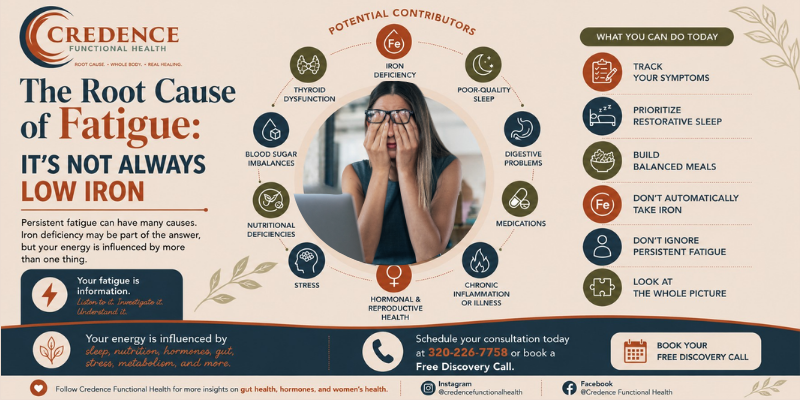
Potential contributors include:
Iron deficiency or anemia
Poor-quality sleep
Thyroid dysfunction
Blood sugar problems
Nutritional deficiencies
Digestive problems
Chronic inflammation or illness
Medications
Stress
Hormonal and reproductive health concerns
This is why taking one supplement doesn't necessarily solve the problem.
1. Iron Matters, But It Isn't Always the Answer
Iron deficiency is one of the most common nutritional deficiencies and can cause fatigue, particularly when it progresses to iron-deficiency anemia.
For women, heavy menstrual bleeding can be an important contributor to iron loss.
If you're experiencing fatigue alongside heavy periods, pale skin, shortness of breath, dizziness, or weakness, iron deficiency may be worth investigating.
But there's an important distinction:
Feeling tired doesn't automatically mean you're low in iron.
Taking iron without knowing whether you're deficient isn't always appropriate.
Depending on your symptoms and medical history, your healthcare provider may consider tests such as a complete blood count, ferritin, and iron studies.
The goal isn't to guess.
It's to find out what your body actually needs.
2. Your Thyroid Could Be Part of the Picture
Your thyroid plays an important role in metabolism and energy regulation.
When thyroid function is impaired, fatigue can be one of many symptoms.

However, these symptoms can overlap with many other conditions.
That's why symptoms alone can't determine whether your thyroid is responsible.
If you're experiencing persistent fatigue, your healthcare provider may determine whether thyroid testing makes sense based on your individual symptoms and history.
3. Eight Hours of Sleep Doesn't Always Mean Restorative Sleep
You can spend eight hours in bed and still wake up exhausted.
Time asleep isn't necessarily the same as quality sleep.
Insomnia, frequent nighttime waking, inconsistent sleep schedules, and sleep disorders can all contribute to daytime fatigue.
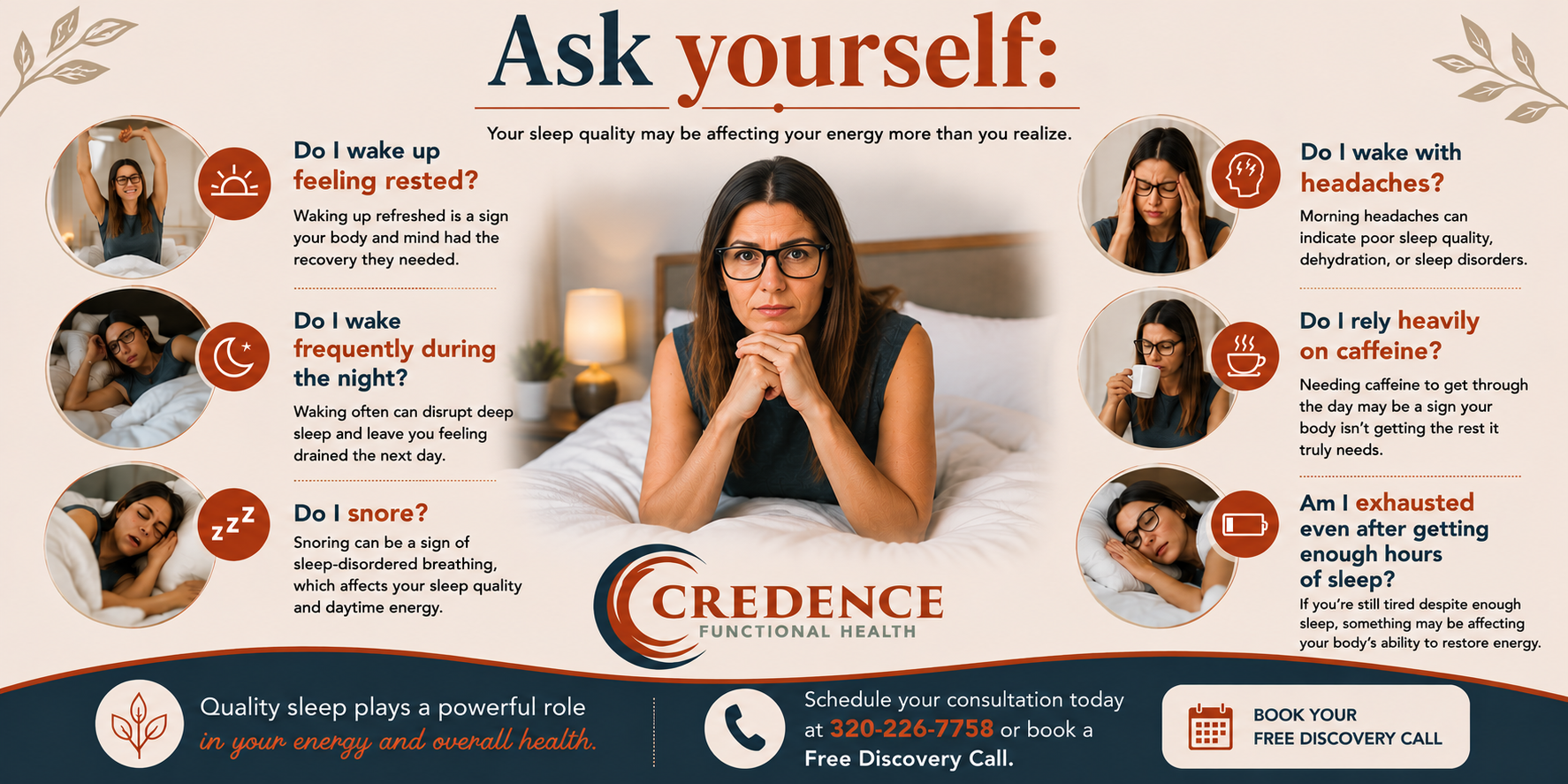
If the answer is yes, your sleep quality may deserve a closer look.
4. Blood Sugar Can Influence Your Energy
Your body needs a steady supply of energy throughout the day.
Your eating patterns influence blood glucose and insulin regulation, which can affect how you feel.
Meals dominated by refined carbohydrates and lacking adequate protein or fiber may leave some people feeling hungry again quickly or experiencing fluctuations in energy.
This doesn't mean every episode of fatigue is a "blood sugar problem."
But metabolic conditions, including diabetes, are among the potential contributors healthcare professionals consider when evaluating unexplained fatigue.
A simple place to start is building balanced meals around:
Protein + fiber-rich carbohydrates + healthy fats
This can support more nutrient-dense eating and overall metabolic health.
5. Your Diet May Not Be Giving Your Body What It Needs
Sometimes fatigue isn't caused by one missing nutrient.
It can be related to overall nutritional inadequacy.
Restrictive diets, inadequate food intake, insufficient protein, or limited food variety can make it difficult to meet your body's nutritional needs.
Nutrients that may be relevant depending on the individual include:
Iron
Vitamin B12
Folate
Vitamin D
Magnesium
Protein
But more supplements aren't automatically the answer.
If you're taking multiple supplements without knowing whether you actually need them, you're treating symptoms without necessarily understanding the cause.
Testing and individualized assessment matter.
6. Your Gut May Be Affecting Your Energy
Your digestive system plays an important role in breaking down food and absorbing nutrients.
So if you're experiencing fatigue alongside persistent digestive symptoms, it's worth paying attention.
You may also experience:
Bloating
Gas
Constipation
Diarrhea
Abdominal discomfort
Food-related symptoms
Unexplained weight changes
Certain gastrointestinal conditions, including celiac disease and inflammatory bowel disease, can be associated with fatigue.
Your digestive symptoms and your fatigue may not be completely unrelated.
Your gut deserves to be part of the conversation.
7. Chronic Stress Can Leave You Feeling Drained
Stress is a normal biological response.
But ongoing stress can affect sleep, appetite, mood, physical activity, and overall well-being.
When you're constantly operating under pressure, your body may have less opportunity for meaningful recovery.
However, it's important not to oversimplify this.
Not every case of fatigue is caused by "cortisol imbalance," and adrenal fatigue is not an established medical diagnosis.
Persistent fatigue deserves an appropriate evaluation rather than simply blaming stress.
At the same time, your mental and physical health are connected.
Sleep, stress, nutrition, and recovery all matter.
8. Women's Hormones Can Be Part of the Bigger Picture
Women's reproductive health can intersect with fatigue in several ways.
For example, heavy menstrual bleeding can contribute to iron deficiency.
Conditions such as endometriosis, PCOS, thyroid disorders, pregnancy, and menopause can also be associated with symptoms that include fatigue.
This is why your menstrual and reproductive history can provide valuable context when you're trying to understand persistent low energy.
Your fatigue may not be caused by your hormones, but your hormonal health shouldn't automatically be overlooked either.
9. Medications Can Sometimes Contribute to Fatigue
If you notice that your fatigue began or worsened after starting a medication, pay attention to the timing.
Some prescription and over-the-counter medications can cause tiredness or drowsiness.
A healthcare professional evaluating fatigue may review your medications, supplements, and other substances as part of the process.
Never stop a prescribed medication on your own.
Instead, discuss possible side effects with your healthcare provider.
What Testing Might Help?
There isn't one universal "fatigue test" that can identify the cause.
The appropriate testing depends on your symptoms, medical history, medications, physical examination, and risk factors.
Depending on the individual, a healthcare professional may consider:
Complete blood count
Ferritin and iron studies
Thyroid testing
Vitamin B12 and folate
Blood glucose or A1C
Metabolic testing
Additional testing based on symptoms
The important thing is that testing should be targeted to your individual situation, rather than ordering every test available.
Because more testing isn't automatically better.
The right testing is better than random testing.
What You Can Do Today
If you're constantly exhausted, start by looking at the basics.
1. Track Your Symptoms
Write down your energy levels, sleep, menstrual cycle, meals, caffeine, digestive symptoms, stress, medications, and supplements.
Patterns can provide useful clues.
2. Prioritize Restorative Sleep
Create a consistent sleep and wake schedule and address persistent sleep problems.
3. Build Balanced Meals
Prioritize protein, fiber-rich foods, healthy fats, and a variety of nutrient-dense whole foods.
4. Don't Automatically Take Iron
If you suspect iron deficiency, talk with your healthcare provider about appropriate testing.
5. Don't Ignore Persistent Fatigue
If exhaustion is affecting your work, relationships, exercise, or daily activities, it's worth discussing with a healthcare professional.
6. Look at the Whole Picture
Your energy is influenced by more than one organ or one lab value.
Sleep + nutrition + metabolism + hormones + digestion + stress + overall health all matter.
The Functional Medicine Perspective
At Credence Functional Health, we believe persistent fatigue deserves more than:
"Your labs are normal."
It also deserves more than:
"You probably just need more iron."
Iron deficiency may be part of the answer.
But your fatigue could also involve sleep, thyroid function, nutrition, blood sugar regulation, digestive health, medications, stress, reproductive health, or another underlying condition.
That's why we believe in looking at the bigger picture.
Instead of asking:
"What's the one thing causing my fatigue?"
we ask:
"What factors could be contributing to why you don't feel like yourself?"
Your body doesn't operate in isolated systems.
Your gut, hormones, metabolism, sleep, stress response, nutrition, and overall health are interconnected.
The Bottom Line
The root cause of fatigue isn't always low iron.
Iron deficiency is important to investigate, especially when risk factors such as heavy menstrual bleeding are present.
But fatigue has many possible causes.
If you're constantly exhausted, don't settle for simply being told to get more sleep or take another supplement without understanding the bigger picture.
Your fatigue is information.
Listen to it. Investigate it. Understand it.
You deserve to know why you don't feel like yourself.
Ready to Take the Next Step?
If you're struggling with persistent fatigue, brain fog, digestive symptoms, hormone concerns, sleep problems, or unexplained changes in your energy, we're here to help you look deeper.
👉 Schedule your consultation today at 320-226-7758 or book a Free Discovery Call.
Together, we'll explore the bigger picture and identify the areas that may deserve a closer look.
Follow Credence Functional Health for more insights on gut health, hormones, and women's health:
Takeaway: Fatigue is a signal from your body, and understanding the bigger picture can be the first step toward finding the right path forward.
Frequently Asked Questions
Can low iron cause fatigue?
Yes. Iron deficiency and iron-deficiency anemia can cause fatigue. However, fatigue has many possible causes, so low iron shouldn't automatically be assumed to be the explanation.
What should I test if I'm always tired?
There isn't one test that explains every case of fatigue. Depending on your symptoms and history, your healthcare provider may consider blood counts, ferritin and iron studies, thyroid testing, metabolic testing, vitamin B12, folate, or other targeted tests.
Why am I tired even though my blood work is normal?
"Normal" results can be reassuring, but they don't necessarily explain every possible cause of fatigue. Sleep quality, medications, stress, nutritional issues, mood, digestive health, and other factors may also matter.
Can hormones cause fatigue?
Hormonal and reproductive health can be associated with fatigue, but fatigue is nonspecific. Thyroid conditions, menstrual blood loss, pregnancy, menopause, PCOS, endometriosis, and other health concerns may contribute depending on the individual.
When should I see a doctor about fatigue?
Consider speaking with a healthcare professional when fatigue is persistent, worsening, unexplained, or interfering with your normal activities.

Disclaimer:
This blog is intended for educational purposes only and does not constitute medical advice, diagnosis, or treatment. Hormonal birth control and hormone-related concerns are complex and should be evaluated by a qualified healthcare provider. At Credence Functional Health, we offer Functional Medicine as a complementary, integrative approach—not a replacement for traditional gynecological or mental health care. The strategies discussed in this blog may not be appropriate for every individual. Always consult your physician before making changes to medications, supplements, or health routines. We encourage you to partner with your medical team to ensure a safe, informed transition that supports your overall wellness.


