
PCOS Is Not Just an Ovarian Problem: Here's What You're Missing
PCOS Is Not Just an Ovarian Problem
Why Your Hormones, Metabolism, Gut, and Whole Body Matter
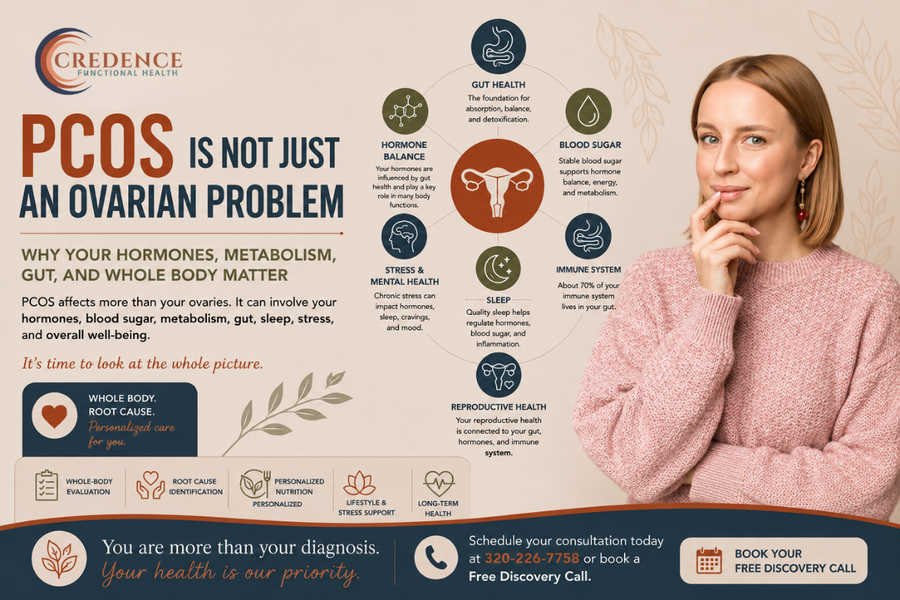
When you hear PCOS, the name can make it sound like the condition is simply about your ovaries.
But PCOS is much more complex than that.
Your ovaries are certainly part of the picture, but PCOS can also involve hormones, blood sugar regulation, metabolism, cardiovascular health, sleep, mental health, and reproductive function. The international evidence-based guidelines emphasize that PCOS has broader metabolic, cardiovascular, psychological, sleep, and pregnancy-related considerations beyond reproductive symptoms alone.
And that is why treating only the symptom you can see may not be enough.
At Credence Functional Health, we believe understanding PCOS means looking at the whole woman, not just her ovaries.
A quick terminology note: The source material notes that in 2026, Monash University and the international guideline network began using Polyendocrine Metabolic Ovarian Syndrome (PMOS) as a new name for the condition previously known as PCOS. Because "PCOS" remains the familiar search term for patients and online health information, we will use PCOS throughout this article while acknowledging the updated terminology.
PCOS Is a Hormonal and Metabolic Condition
PCOS can affect the way your body regulates reproductive hormones and metabolism.
Some women experience:
Irregular or absent periods
Acne
Excess facial or body hair
Hair thinning
Difficulty with ovulation
Fertility challenges
Weight changes
Blood sugar concerns
But not every woman experiences the same symptoms.
That is one reason PCOS can be overlooked or misunderstood.
There is no single "PCOS woman."
The condition can look very different from one person to another.
Insulin and Blood Sugar Are Part of the Picture
One of the most important reasons PCOS should not be viewed as an ovarian problem alone is its relationship with metabolic health.
Women with PCOS have an increased risk of impaired glucose tolerance and type 2 diabetes, including women who are not considered overweight.
Insulin is a hormone that helps regulate blood glucose.
When your body has difficulty responding appropriately to insulin, your pancreas may produce more insulin to compensate. This metabolic environment can interact with other hormonal pathways involved in PCOS.
That is why assessing metabolic health can be an important part of comprehensive PCOS care.
Your Weight Does Not Tell the Whole Story
PCOS is often associated with weight gain, but PCOS does not only affect women in larger bodies.
A woman can have PCOS and have a normal body weight.
This is important because focusing exclusively on weight can cause other symptoms and metabolic risks to be overlooked.
The international guideline emphasizes healthy lifestyle behaviors for all women with PCOS, regardless of weight, while also highlighting the importance of avoiding weight stigma.
The goal should not simply be:
"Lose weight."
A better question is:
"How can we support your metabolic and overall health?"
What About the Gut?
Your gut is not the cause of every hormone imbalance, and PCOS should not automatically be blamed on "leaky gut."
But your digestive system is still an important part of the bigger picture.
Your gut interacts with your:
Immune system
Metabolism
Nutrient absorption
Inflammatory pathways
Hormone metabolism
If you are experiencing PCOS alongside bloating, constipation, diarrhea, digestive discomfort, or food-related symptoms, those concerns deserve attention too.
Rather than assuming one condition is responsible for everything, a comprehensive approach looks at how different systems may be interacting.
Stress and Sleep Matter Too
PCOS is not just about reproductive hormones.
The international guideline highlights the importance of psychological health and sleep, including the increased prevalence of sleep apnea in women with PCOS.
Chronic stress and poor sleep can affect energy, appetite, blood sugar regulation, mood, and overall quality of life.
If you are trying to manage PCOS while running on little sleep and constantly feeling stressed, your overall health deserves attention, not just your menstrual cycle.
PCOS Can Affect More Than Your Period
Your period may be the symptom that gets your attention first.
But PCOS can involve much more.
A comprehensive evaluation may consider:
Menstrual and reproductive health
Androgen-related symptoms
Blood sugar and metabolic health
Cardiovascular risk factors
Sleep
Mental and emotional well-being
Nutrition
Physical activity
Weight and body composition
Fertility goals
The international guideline specifically recommends a broader approach to PCOS assessment and management rather than focusing solely on reproductive symptoms.
The Functional Medicine Perspective
Instead of asking only:
"How do we treat your PCOS?"
A functional medicine approach also asks:
"What is happening in your body, and what factors may be contributing to your symptoms?"
That may mean looking beyond the ovaries and considering the relationship between:
Hormones → Blood Sugar → Metabolism → Gut → Stress → Sleep → Inflammation → Overall Health
These systems do not operate independently.
And neither should your healthcare plan.
At Credence Functional Health, we believe understanding these connections can help create a more personalized approach to your health.
Actionable Steps You Can Take Today
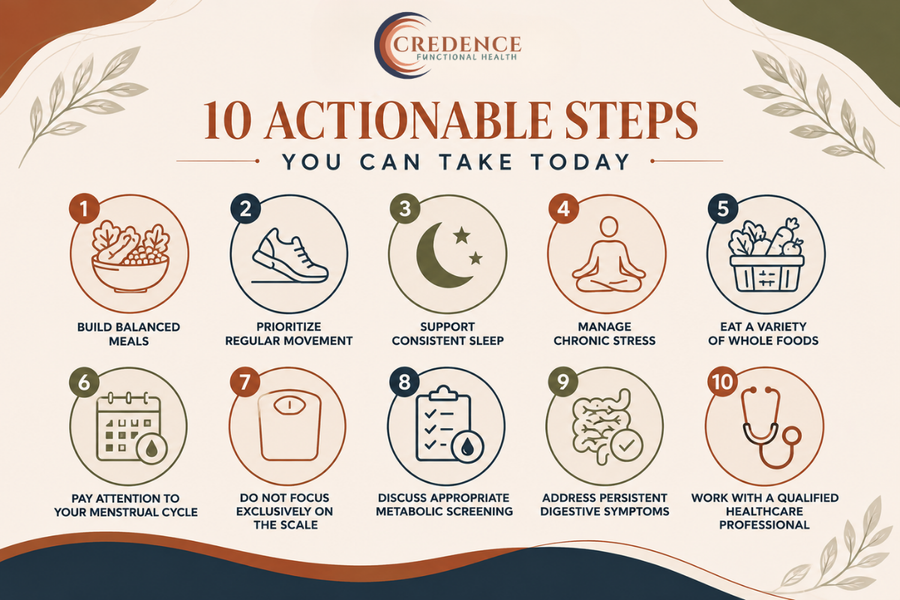
You do not need to completely change your life overnight.
Start with the basics:
1. Build Balanced Meals
Include protein, fiber, healthy fats, and nutrient-dense carbohydrates to support balanced nutrition and metabolic health.
2. Prioritize Regular Movement
Incorporate regular movement, including strength training and cardiovascular activity as appropriate for your individual needs.
3. Support Consistent Sleep
Prioritize quality sleep and discuss persistent sleep problems with your healthcare provider.
4. Manage Chronic Stress
Find realistic daily practices that help you manage stress and support your overall well-being.
5. Eat a Variety of Whole Foods
A diverse, nutrient-dense diet can support nutritional adequacy and gut health.
6. Pay Attention to Your Menstrual Cycle
Track your cycle and symptoms so you can identify patterns or changes worth discussing with your healthcare provider.
7. Do Not Focus Exclusively on the Scale
Your metabolic health is about much more than your body weight.
8. Discuss Appropriate Metabolic Screening
Talk with your healthcare provider about appropriate screening based on your individual risk factors and health history.
9. Address Persistent Digestive Symptoms
Do not assume that bloating, constipation, diarrhea, or digestive discomfort are simply part of having PCOS.
10. Work With a Qualified Healthcare Professional
Your reproductive, metabolic, digestive, and overall health all deserve consideration when developing your care plan.
The Bottom Line
PCOS is not simply an ovarian problem.
It is a complex condition that can affect reproductive health, hormones, metabolism, blood sugar regulation, cardiovascular risk, sleep, and psychological well-being.
And that is why your care should go beyond simply asking whether your ovaries look "polycystic."
At Credence Functional Health, we believe in looking at the whole picture.
Your symptoms matter.
Your metabolism matters.
Your gut matters.
Your sleep matters.
Your mental well-being matters.
And your health is about much more than your ovaries.
Ready to Take the Next Step?
If you're struggling with PCOS symptoms, irregular cycles, hormone imbalance, stubborn weight changes, fatigue, acne, digestive concerns, or blood sugar issues, we're here to help you look deeper.
👉 Schedule your consultation today at 320-226-7758 or book a Free Discovery Call.
Follow Credence Functional Health for more insights on gut health, hormones, and women's health:
PCOS is a whole-body condition, and understanding the connections between your hormones, metabolism, gut, sleep, and overall health can be an important step toward better care.
Frequently Asked Questions
Is PCOS only an ovarian condition?
No. PCOS involves reproductive hormones but can also have important metabolic, cardiovascular, sleep, and psychological implications. A comprehensive approach to assessment and management is recommended.
Can you have PCOS without being overweight?
Yes. PCOS can occur at any body size. Metabolic risk should not be judged by weight alone, which is why appropriate health screening and individualized assessment matter.
Does PCOS increase the risk of blood sugar problems?
Yes. PCOS is associated with an increased risk of impaired glucose tolerance and type 2 diabetes, which is why metabolic screening can be an important part of comprehensive care.
Can gut health affect PCOS?
The gut, metabolic, and hormonal systems interact, but current evidence does not support saying that gut problems alone cause PCOS. Digestive symptoms should be evaluated individually rather than automatically attributed to PCOS.

Disclaimer:
This blog is intended for educational purposes only and does not constitute medical advice, diagnosis, or treatment. Hormonal birth control and hormone-related concerns are complex and should be evaluated by a qualified healthcare provider. At Credence Functional Health, we offer Functional Medicine as a complementary, integrative approach—not a replacement for traditional gynecological or mental health care. The strategies discussed in this blog may not be appropriate for every individual. Always consult your physician before making changes to medications, supplements, or health routines. We encourage you to partner with your medical team to ensure a safe, informed transition that supports your overall wellness.


